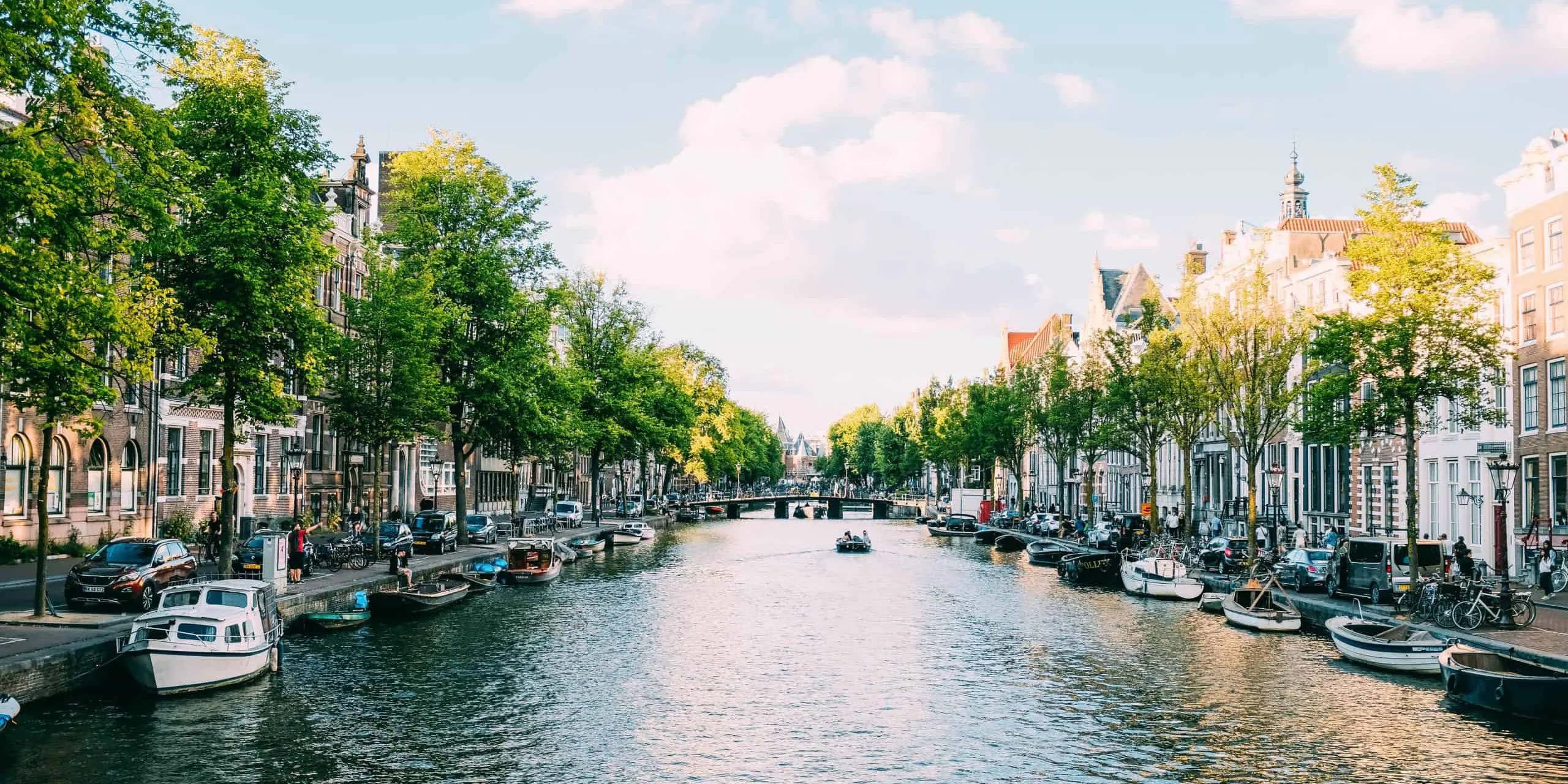
 The canals
History
From fishing village to world-famous canal belt

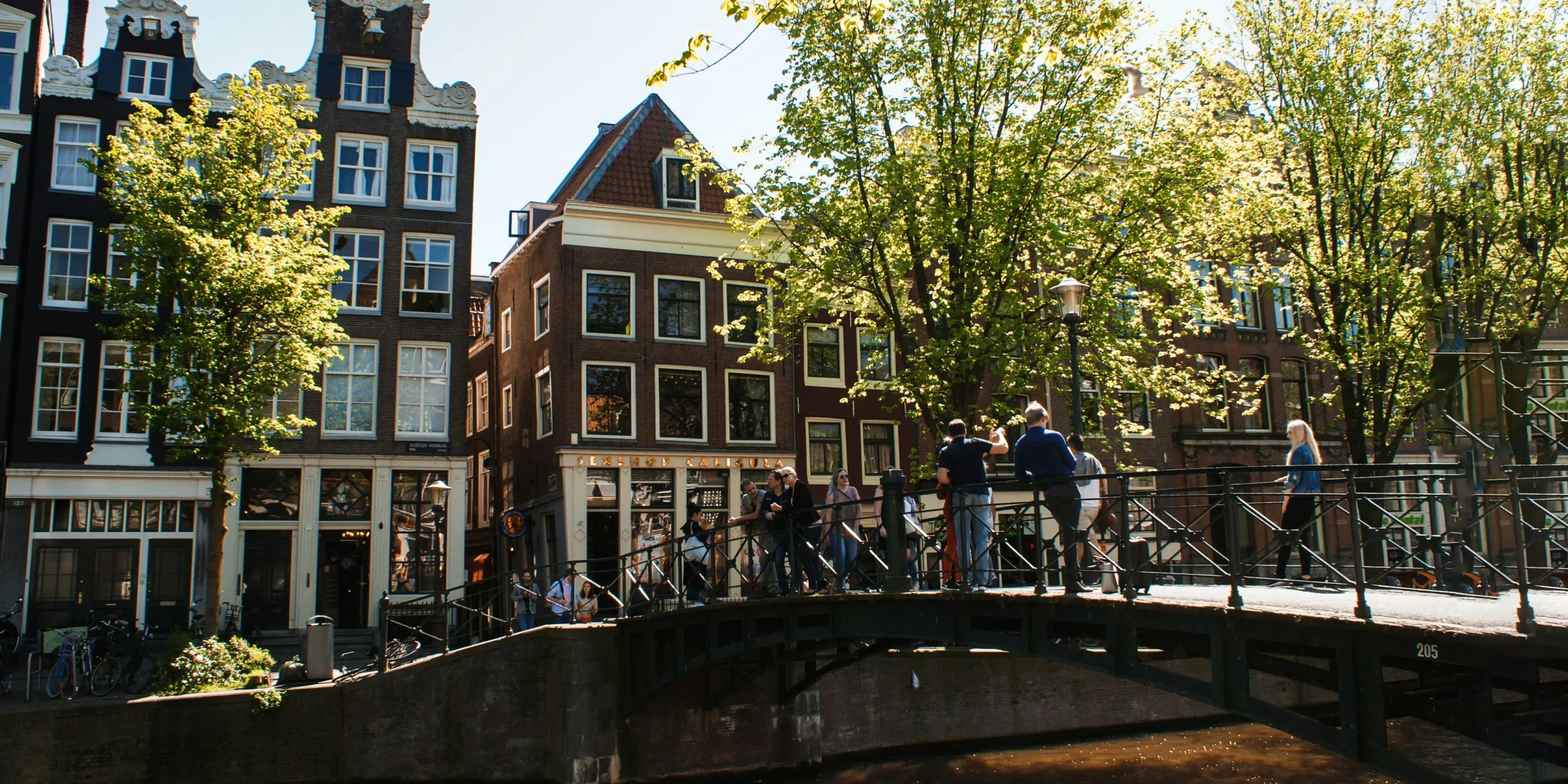
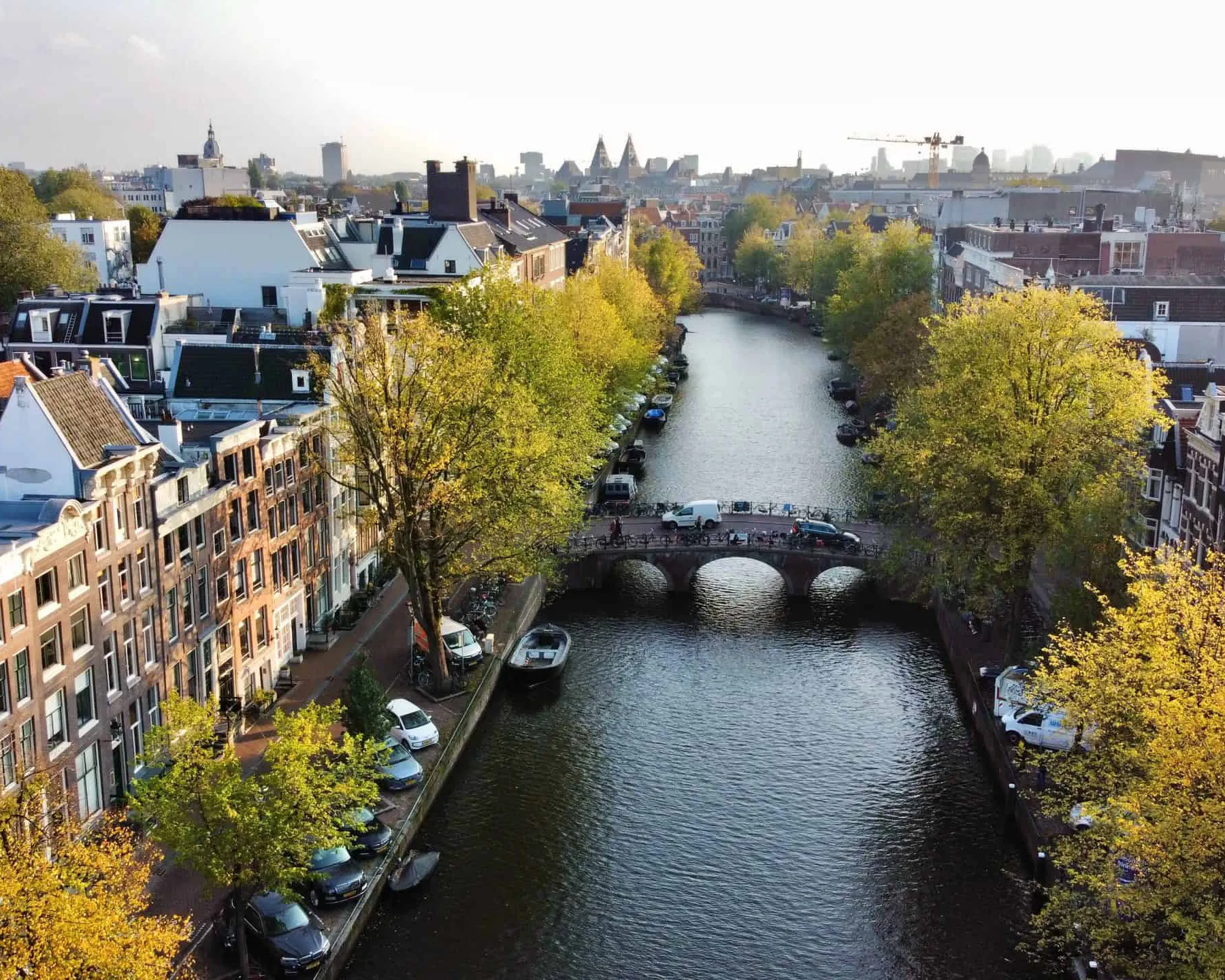
When one thinks of Amsterdam, one thinks of its canals, and therefore inevitably of its bridges. We partly owe the nickname 'The Venice of the North' to the many bridges that visitors cross to discover the city .
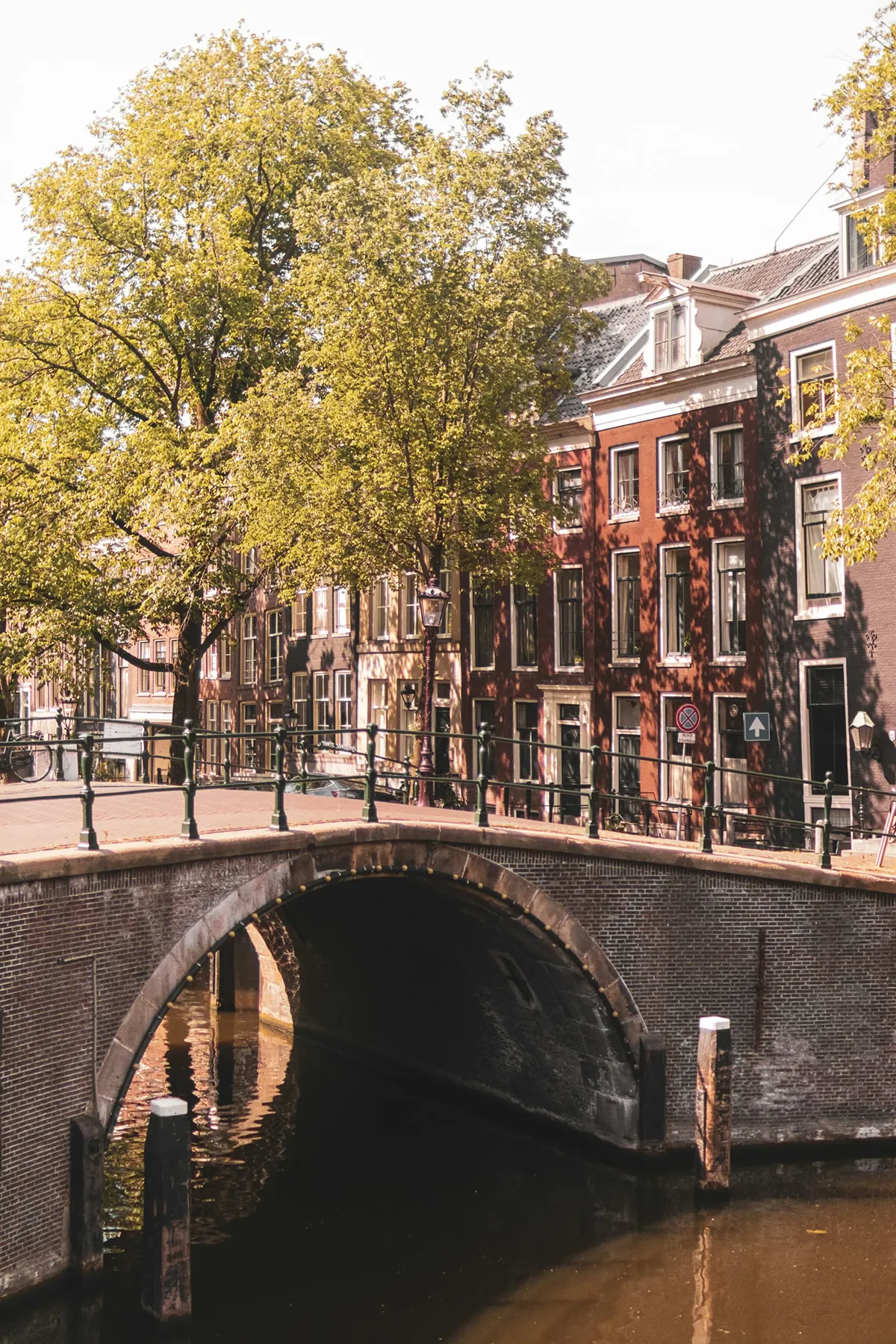
However, the complex web that connects the different parts of the city does not only serve as infrastructure. The bridges of Amsterdam largely determine the characteristic, picturesque appearance of the city and have formed indispensable points of recognition and encounter throughout our entire history .
On the oldest map of Amsterdam from 1554, 35 wooden bridges are depicted. This number has risen considerably over the centuries; in the Golden Age, Amsterdam had about 200 bridges, at the beginning of the twentieth century this number was approximately 350, and today some 1,200 bridges spin their web through the city. Just as in architecture, different styles can also be recognized in the design of the bridges . From the twentieth century onwards, work in the style of the Amsterdam School grew in prestige. This can be seen, for example, in the design of the Koningssluis, between the Koningsplein and the Leidsestraat, designed by P.L. Kramer. This bridge has since become a national monument (Rijksmonument) , just like many other bridges in Amsterdam. Another bridge designed by P.L. Kramer in the typical Amsterdam School style is the Kikkerbilsluis on the Prins Hendrikkade.
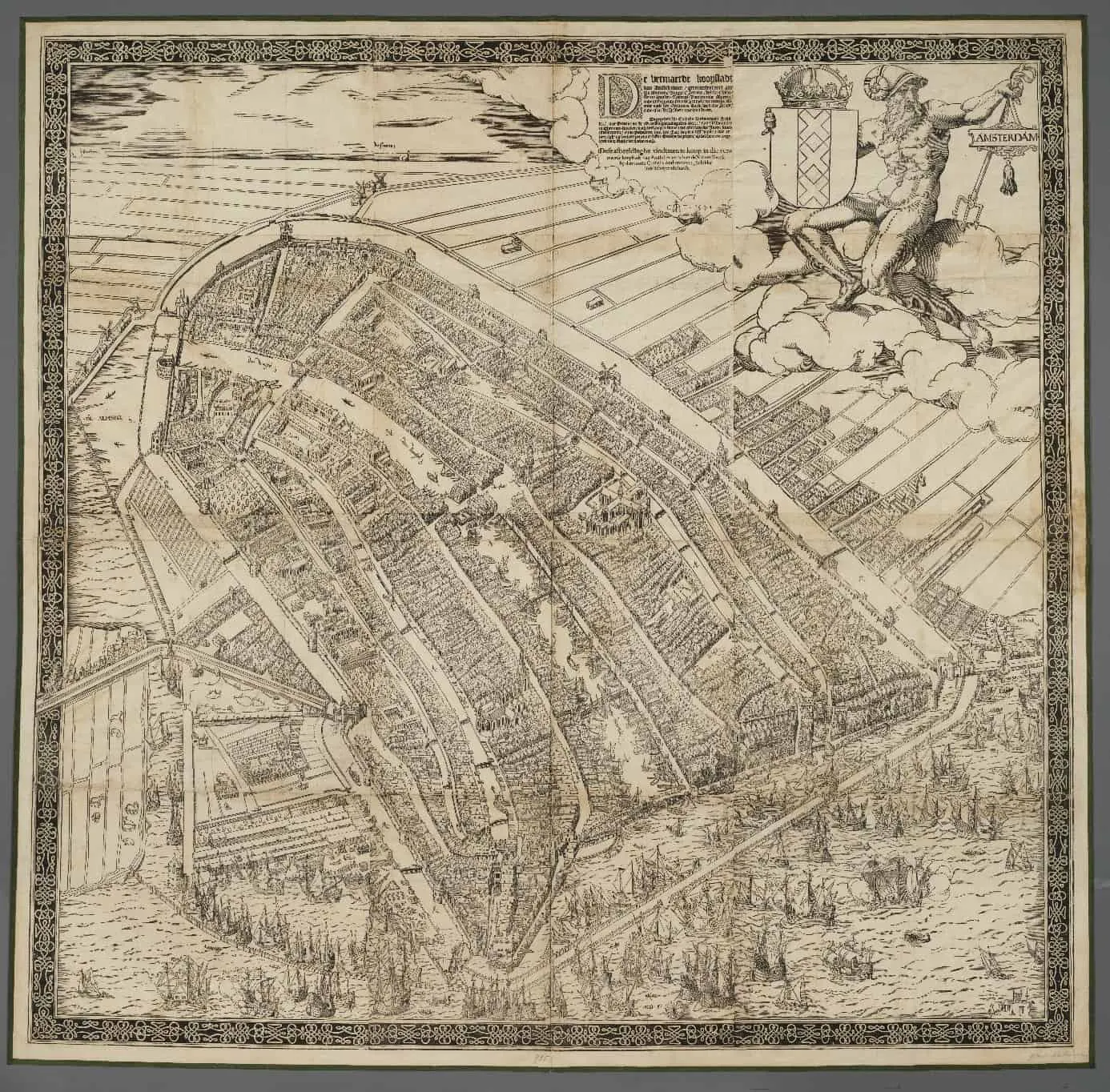
Oldest map of Amsterdam. Amsterdam City Archives: Cornelis Anthonisz, 1554
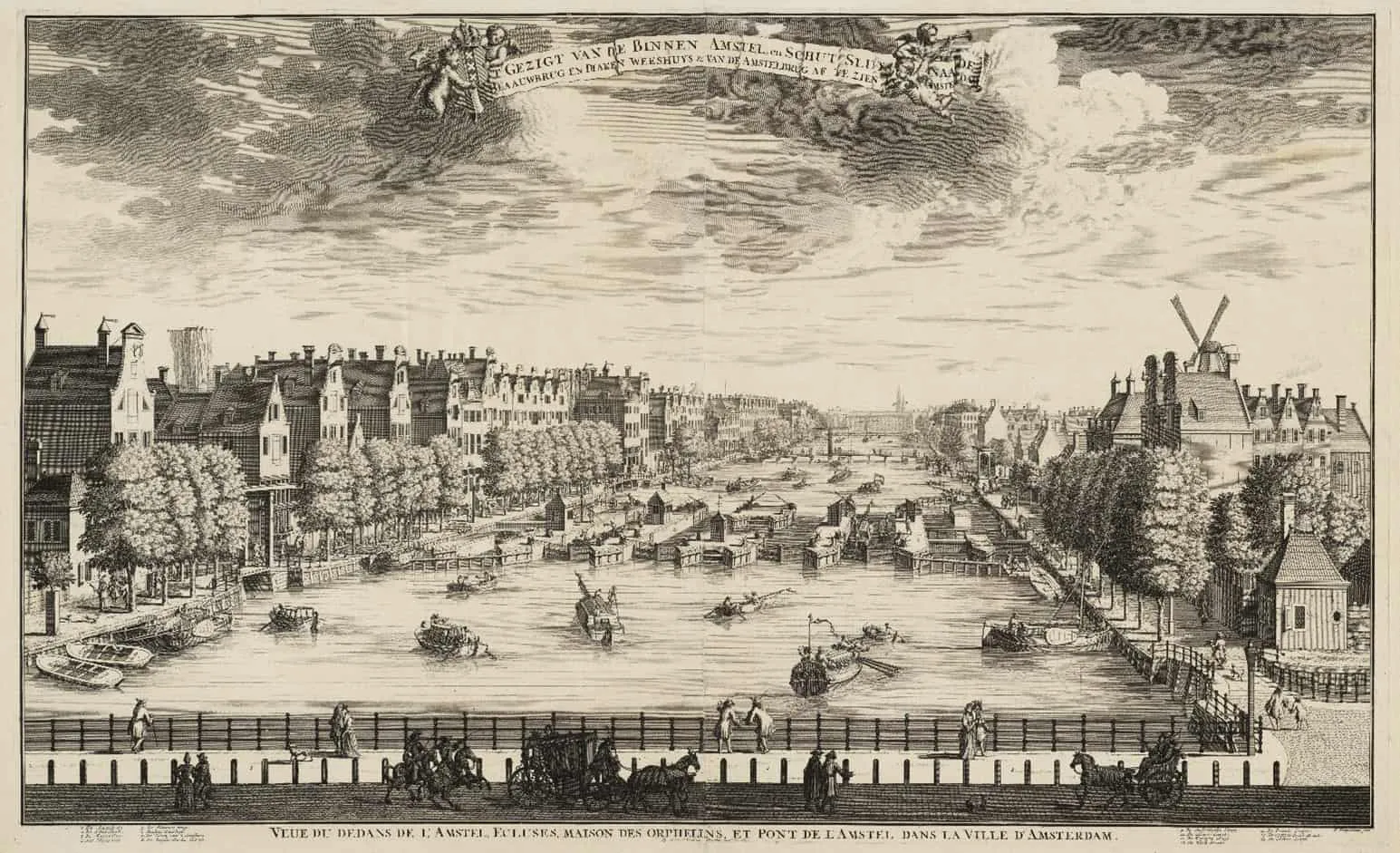
View of the Amstel.
City Archives: Engraving by Daniel Stoopendaal, published by Nicolaas Visscher. 1702-1713
Bridge building in the Netherlands developed as early as the early Middle Ages. Through experience in ecclesiastical vault construction, it became possible to build stone bridges even on our soft soil. Due to the development of shipping, a need for movable bridges, such as drawbridges, arose, probably towards the end of the fourteenth century. These movable drawbridges formed a characteristic part of the North Dutch landscape in the seventeenth century. Nevertheless, due to rising car traffic, various steep, high arched bridges were replaced by steel bridges from the twentieth century onwards, and drawbridges were replaced by fixed bridges. This is likely also the reason why the Blauwbrug over the Amstel replaced an older version from 1839 in 1938.
The design of this majestic bridge by De Greef and Springer is eclectic and presumably inspired by bridges over the Seine in Paris. Further along the Amstel lies the picturesque Magere Brug (Skinny Bridge). A narrow ('skinny'), wooden pedestrian bridge already stood at this location in 1640. This bridge was converted into a double drawbridge in 1840, and converted again to its current form in 1871. Furthermore, on the adjacent print (above on mobile) from 1702-1713, seen from the Amstelbrug, we see in succession the Amstelsluizen, the old Magere Brug, and the old Blauwbrug.
Anyone who has ever cycled through Amsterdam may notice that the bridges can be very steep. In this photo from the beginning of the twentieth century, we see the Vierheemskinderensluis from 1836, the bridge next to the Museum of the Canals. In this wintry scene from 1912-1916, we see a so-called 'Bruggentrekker' (bridge puller), or 'kar-ga-door'. These people helped passers-by pull their carts over the city's high arched bridges for a few cents .
A well-known and popular 'kargadoor' from Amsterdam was, for example, 'Kikkie van de Prinsensluis', who operated the bridge over the Spiegelgracht in front of the Prinsenstraat. Before that, Kikkie operated the Reesluis, and during this time a postcard of him even appeared. Kikkie the kargadoor, whose real name was Christiaan Smit, died in 1940 at the age of 82 as the last of his guild.
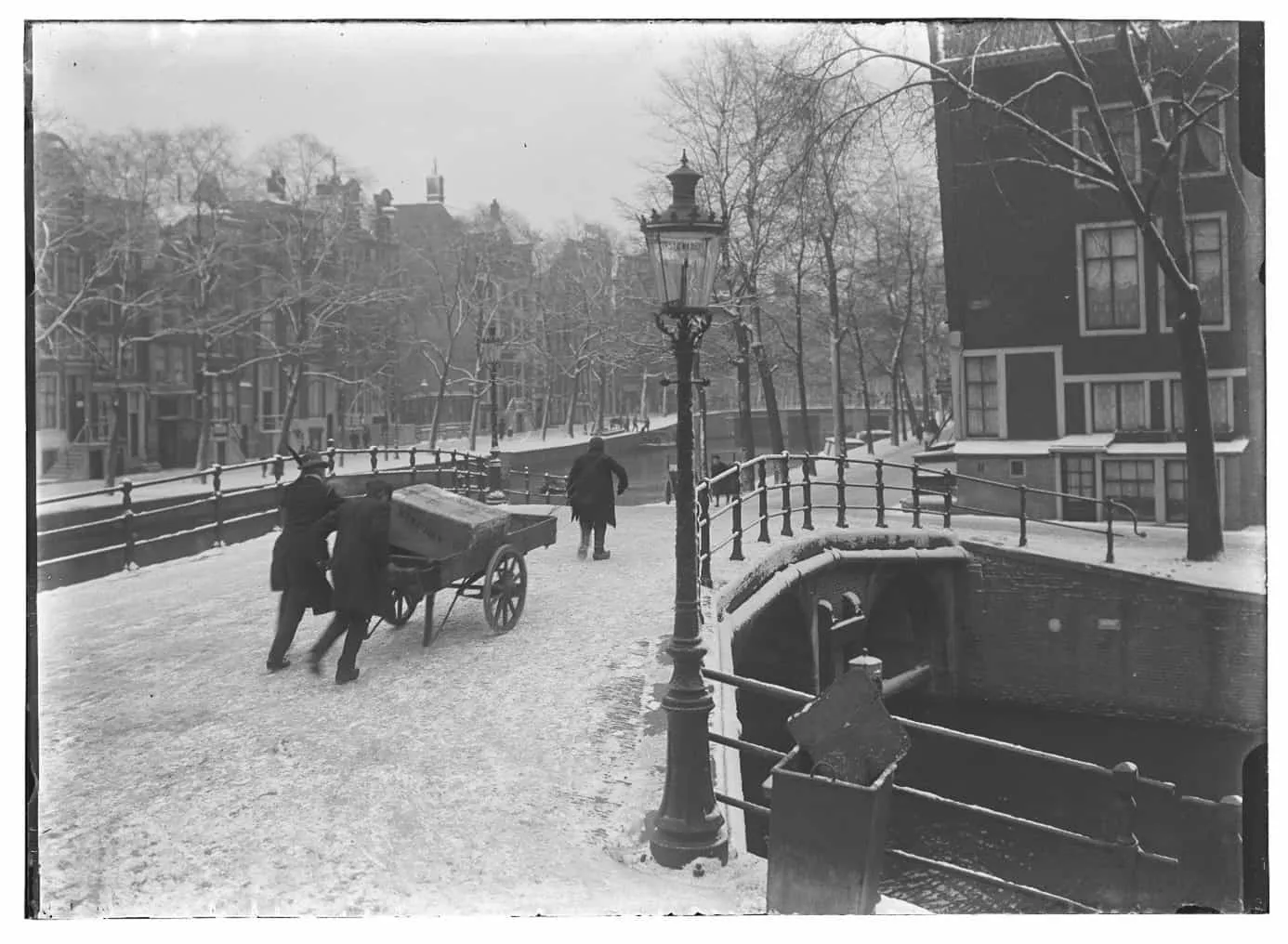
The Vierheemskinderensluis (1836),
on the corner of the Museum of the Canals.
City Archives: Bernard F. Eilers.
1912-1916
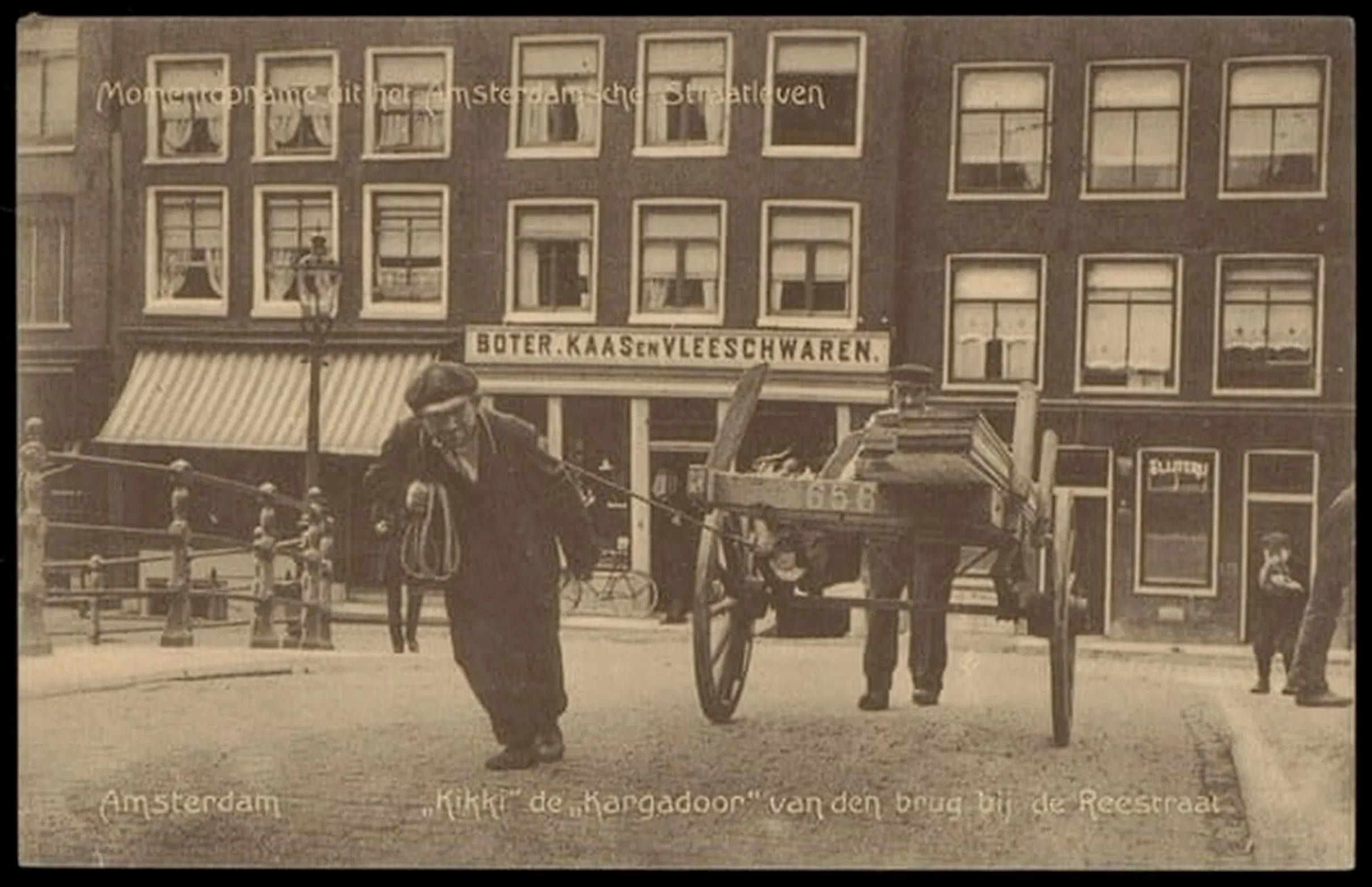
'Kikki' the Kargadoor, serving the Reestraat.
Amsterdam City Archives: Berg en Co., ca. 1912
Where in a village the village square was the place where people gathered to discuss the news, in Amsterdam that was the bridge. The Oude- and Nieuwebrug were particularly busy; news was discussed and business was conducted here to one's heart's content . On the Oudebrug, this was reinforced by the presence of small maritime shops, where the news that sailors brought from distant lands was heard with great interest. This Oudebrug spanned the Damrak and was demolished towards the end of the nineteenth century.
The spreading of news from distant worlds also took place at the 'Paalhuis' near the Nieuwebrug. The Paalhuis was demolished in the mid-seventeenth century. This Paalhuis was the office where 'paalgeld' (buoyage dues) had to be paid for the ships lying in the harbor. There were also often stalls with merchandise on the bridges, which attracted even more activity. In other words: the bridges were the center of busy, social city life.
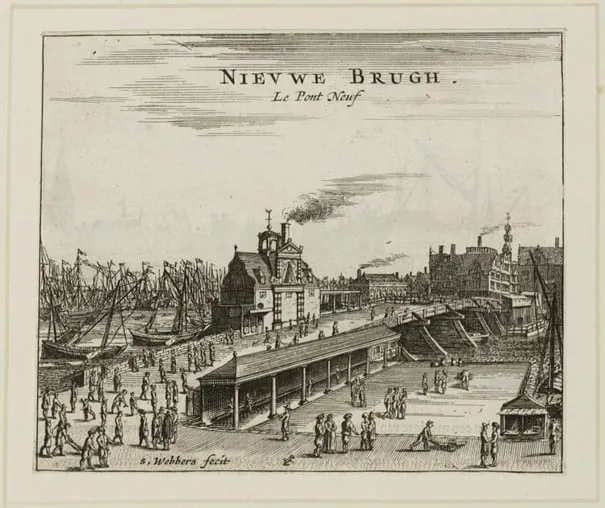
The Nieuwe Brug with the Paalhuis. City Archives: S. Webbers, 1665
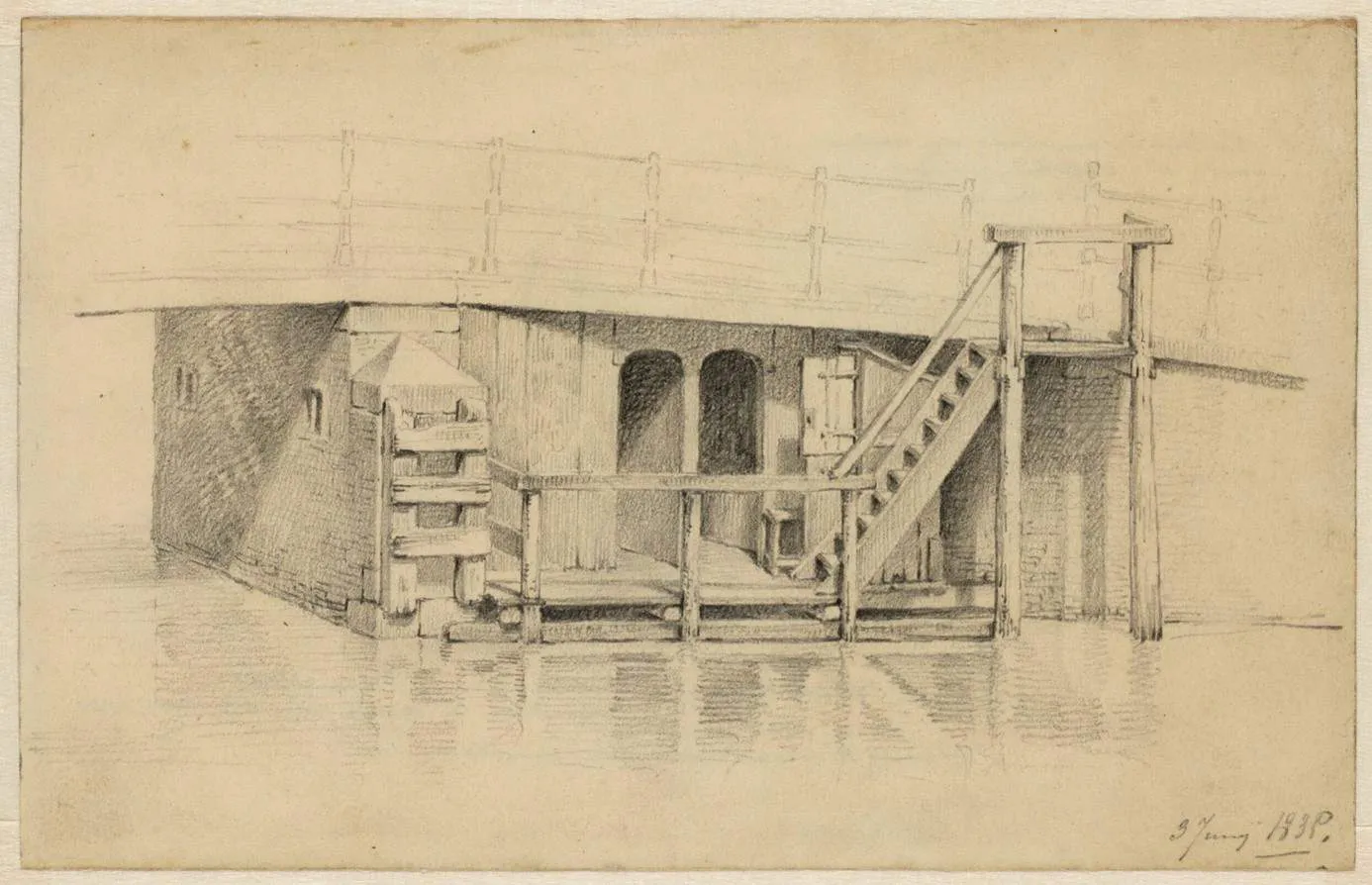
Public privy on the Oudezijds Voorburgwal near the Nieuwezijds Kolk.
City Archives: Pieter Veldhuyzen, 1835
The bridge also facilitated a very different need. As early as the sixteenth century, there was a desire to keep the city clean, and there was a fine for public urination in the city. To provide for the needs of passers-by, so-called 'stilletjes' (privies) existed under the bridge. These were small houses built out over the canal; an early form of the public toilet.
These public toilets (or 'privies') were filthy places where sometimes even corpses were found, but also places where outsiders of society sought each other out. Moreover, men came to these 'privies' looking for homosexual contacts, and homeless people slept there. As a result, the bridge, and the public toilet beneath it, formed the beating heart of Amsterdam's street life.
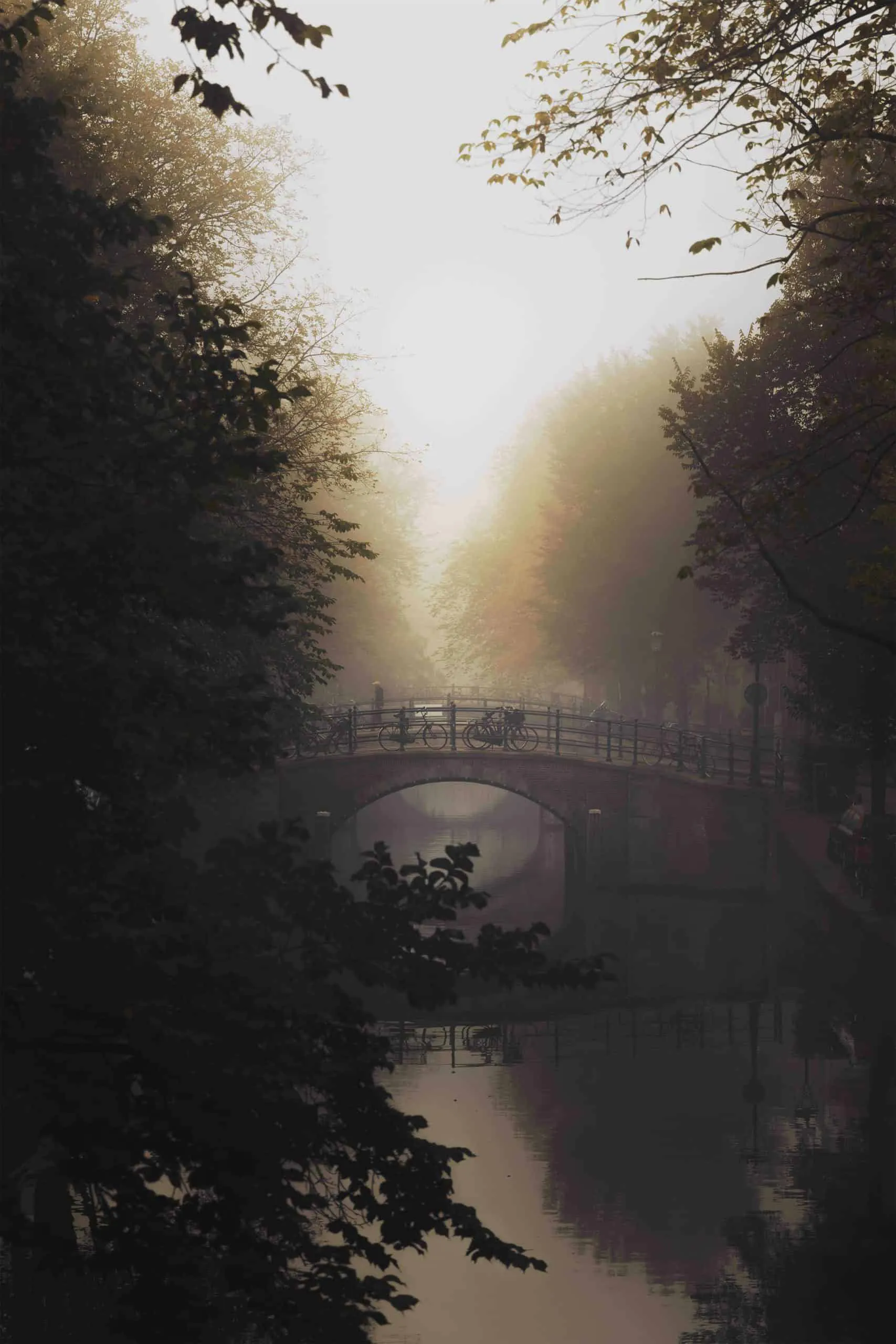
Gosse Bouma, Your memory won't fade, 2021
Today we no longer need to use a 'stilletje', we are no longer dependent on distant travelers for the transmission of world news, and although many a cyclist would appreciate it, there are no more Kikkies to pull us over the bridge. But the bridges of Amsterdam still stand, and form an indispensable skeleton of the city, by which we recognize our way, meet each other, and enjoy the city.
The canalsFrom fishing village to world-famous canal belt
 The canals
UNESCO World Heritage since 2010
 The canals
Biodiversity and climate change on the canals