 The canals
History
From fishing village to world-famous canal district

For centuries, the Amsterdam canals have been praised at home and abroad as a unique example of urban expansion. In July 2006, the City of Amsterdam announced its intention to nominate the Amsterdam canal district for the UNESCO World Heritage List.
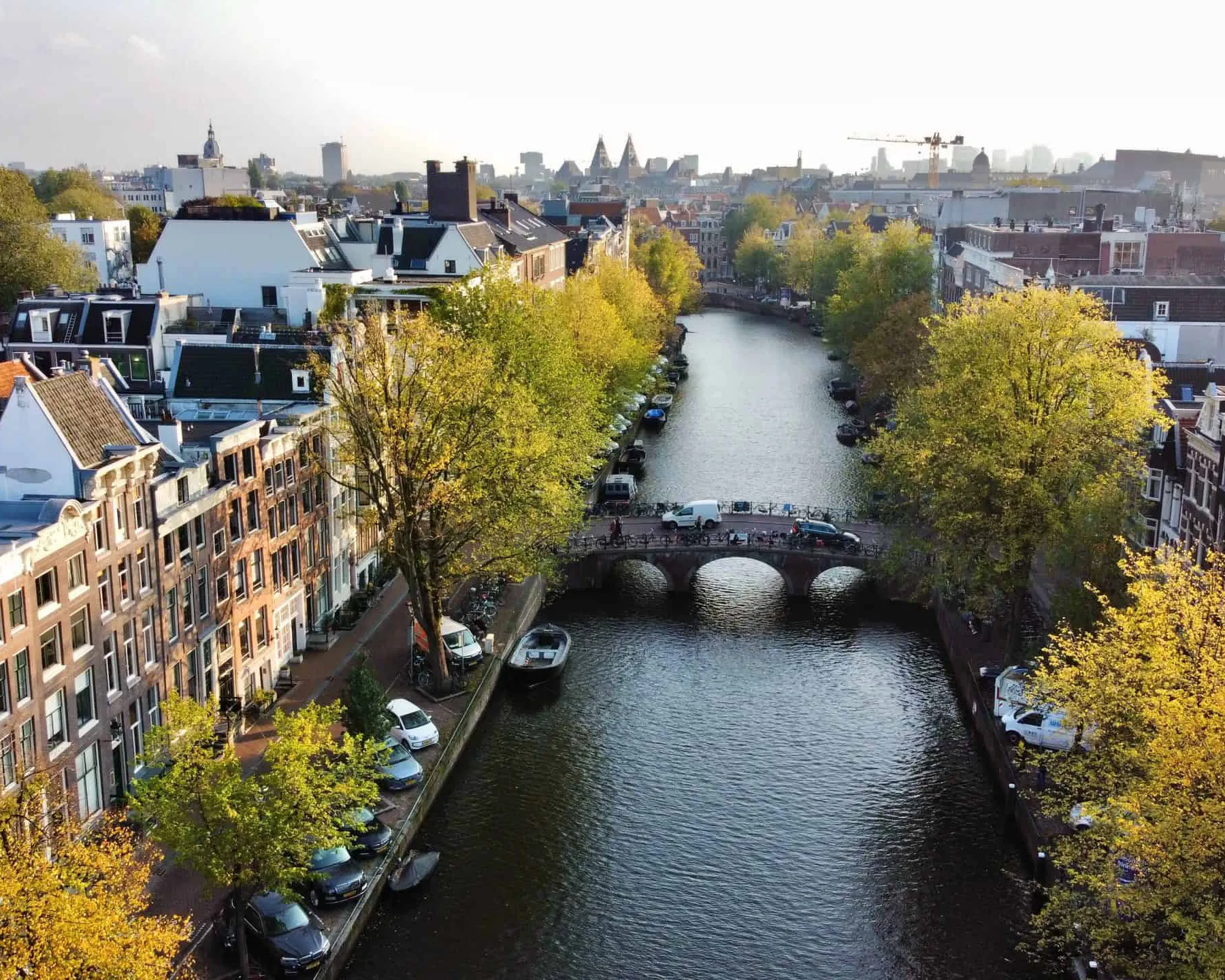
Photographer: Alex Lokas
On August 1, 2010, the unique status of the canal district was confirmed when it was added to the World Heritage List during the 34th session of the World Heritage Committee. According to UNESCO, 'It is a masterpiece of hydraulic engineering, urban planning, and a well-conceived combination of construction work and urban architecture'. UNESCO describes the Amsterdam canal district as heritage of 'outstanding universal value'. According to UNESCO, the canal houses also represent the humanistic and tolerant culture for which Amsterdam is known. To be added to the World Heritage List, the Amsterdam canal district had to meet one of the ten criteria formulated by UNESCO. These criteria demonstrate the exceptional value of the heritage.
Three criteria applied to the canal district. The first relates to the design of the canal district. It was designed at the end of the sixteenth century and built in the seventeenth century. The design made Amsterdam a unique and large-scale, yet homogeneous whole. The canal district is the first urban planning project to be designed and constructed on such a large scale. Therefore, it is seen as a masterpiece of human creative genius. The design incorporated the functions of living, working, and transport. As a result, functionality and beauty were combined at a very high level.
The second UNESCO criterion concerns the exchange of influences in the technical, urban planning, maritime, and cultural fields of which the canal district was a part for two centuries. Amsterdam witnessed many exchanges in the fields of urban planning, architecture, and civil engineering. For instance, in the seventeenth century, Amsterdam was the capital of international trade and intellectual exchange. It was here that the foundation was laid for the spread of humanistic thought.
The third UNESCO criterion mentions how Amsterdam is typical of a certain architecture. Amsterdam and its canal houses, with a wide variety of facades, bear witness to a very important period in the history of the modern world. In addition, Amsterdam is the largest and most prominent example of a Dutch canal city in which water traffic determines the urban design. Furthermore, in the seventeenth and eighteenth centuries, Amsterdam was seen as the realization of an ideal city. Therefore, this successful urban planning project served as a model for many other projects in cities around the world.
UNESCO has divided the canal district into a core and buffer zone. The core zone, which you can see indicated in red on the map, constitutes the core zone of the world heritage site. Additionally, there is the buffer zone, the area indicated in gray on the map. This buffer zone serves to protect the core zone. It is important to note that the boundary of the buffer zone is identical to that of the state-protected cityscape since 1999. The UNESCO status granted in 2010 is therefore a continuation of the monument policy pursued in the city center until then.
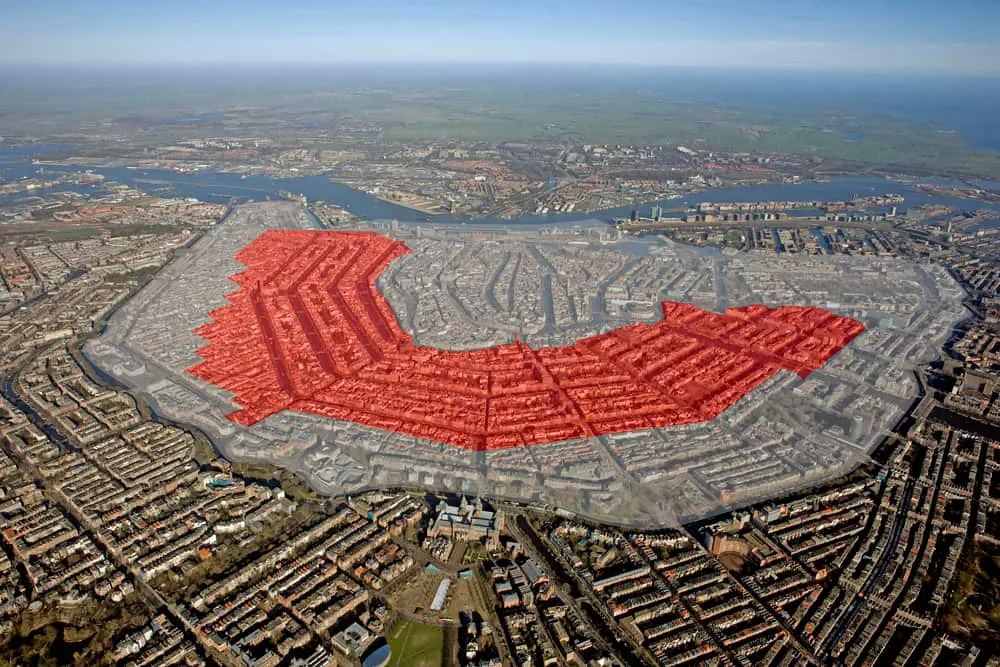
City of Amsterdam, photo: Cor Harteloh
The canalsFrom fishing village to world-famous canal district
 The canals
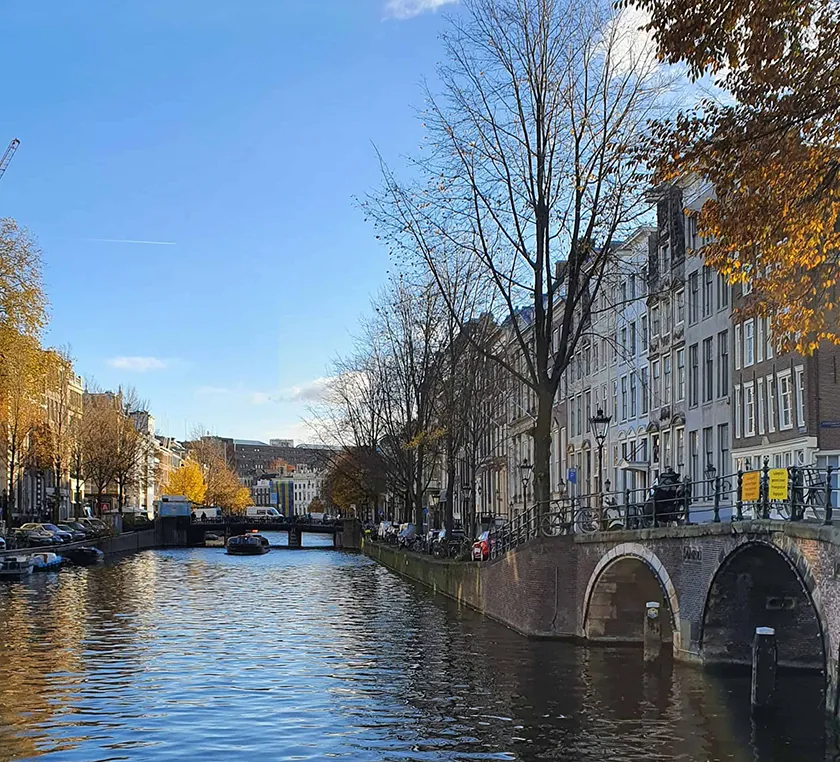
Herengracht, Keizersgracht, Prinsengracht, and Singel
The canalsFacades of Amsterdam through the centuries