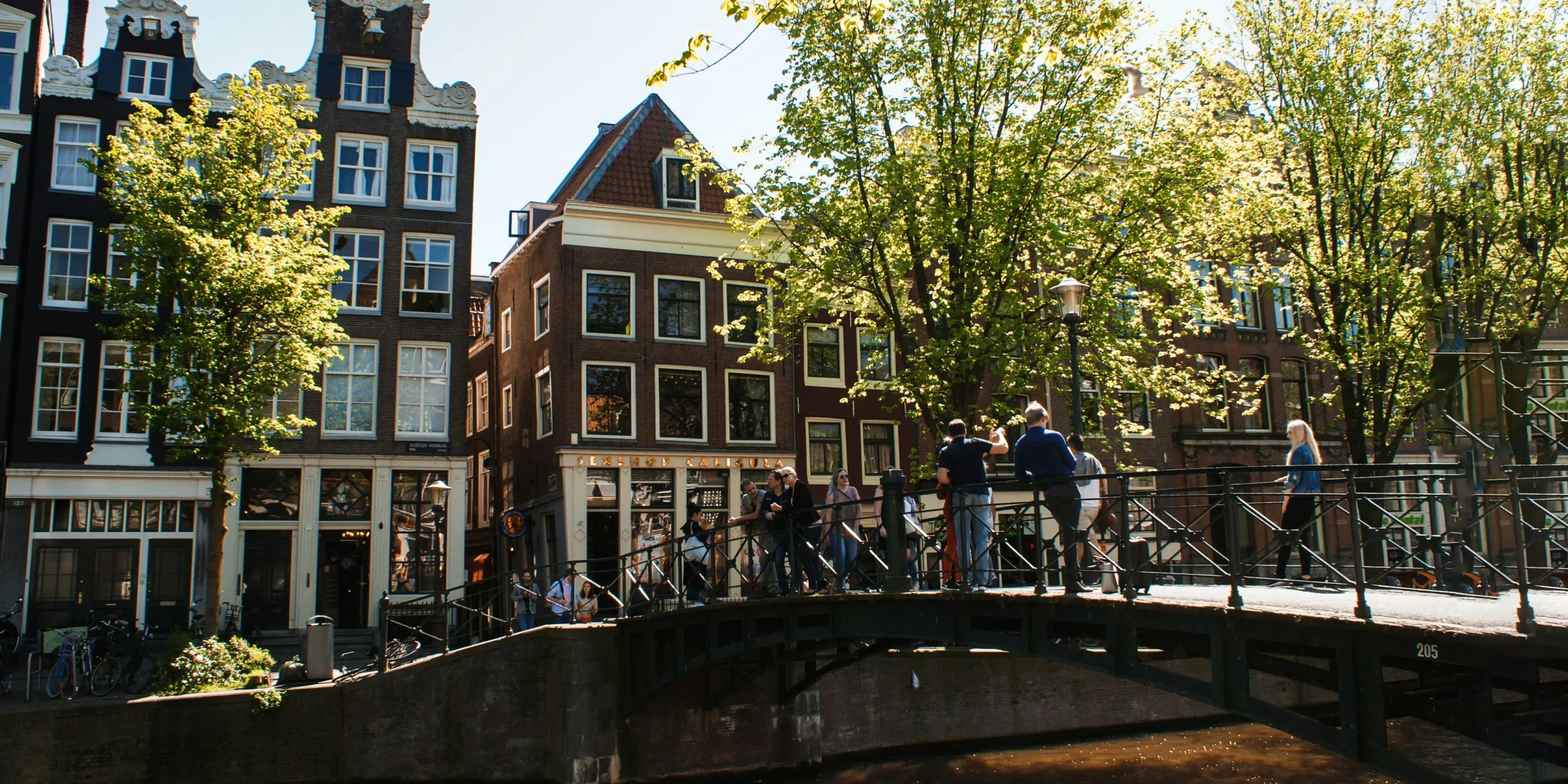
 The canals
Bridges
The Venice of the North

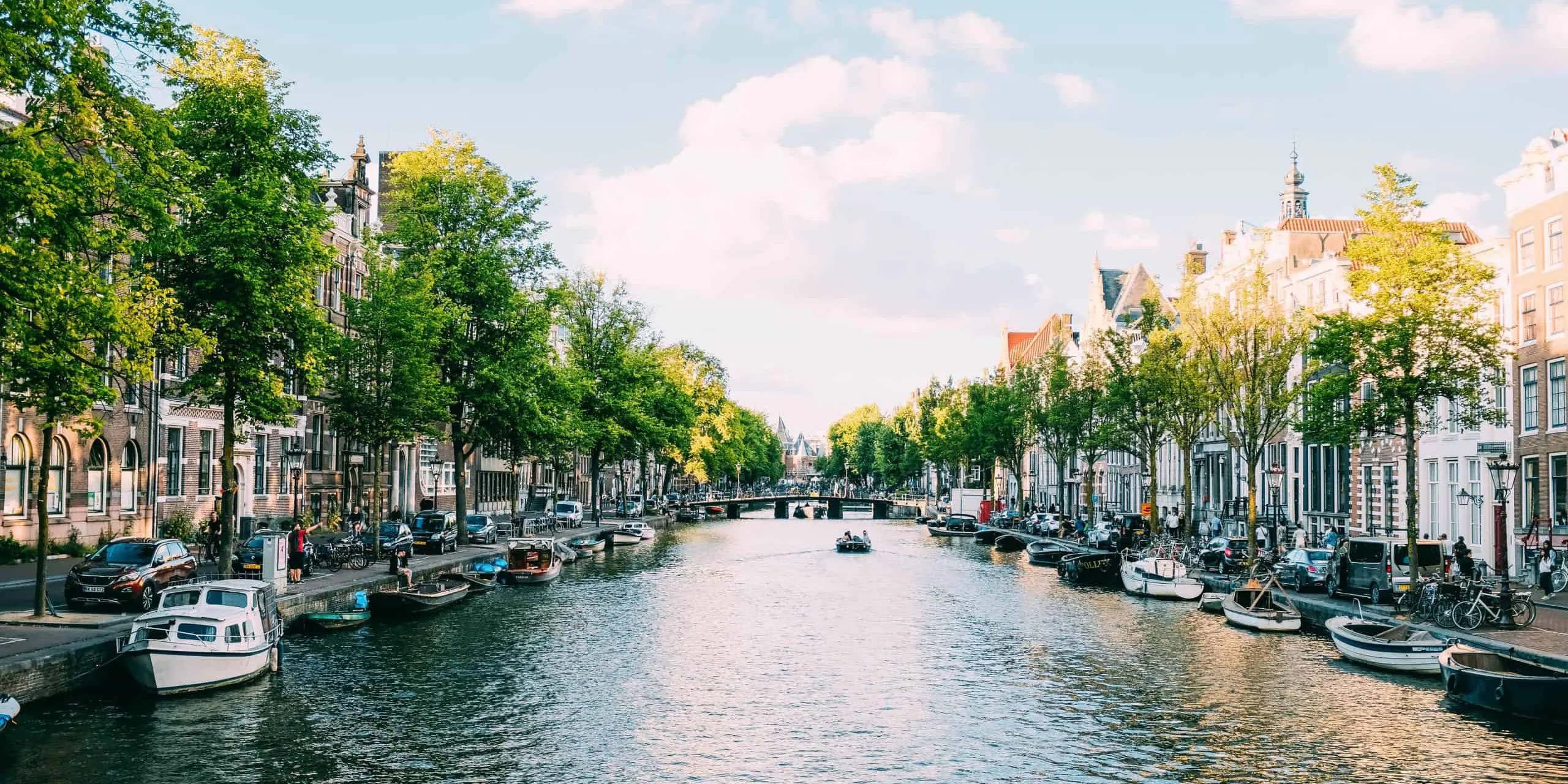
Amsterdam is built on piles, but a part of our population lives on water, literally. The houseboat is a striking part of the image of the Amsterdam city center, and enriches the picturesque scene of the canal belt. Within the Singel, there are about 750 houseboats on our waters. There are roughly two types of houseboats: the 'woonschip' (houseboat ship) and the 'woonark' (house ark). The 'woonschip' is usually an old inland vessel where the former cargo hold has been converted into a residence. A 'woonark' is a boat specifically built for living; a house on water.
As early as the seventeenth century, people lived on the water of Amsterdam's canals. The houseboat residents in this period were often foreign traders who sold their wares illegally from their boats. Consequently, the relationship between the city government and houseboat residents was poor; the traders were said to cause a nuisance and form unfair competition for other traders in the city. The city government was therefore more than happy to see the back of these houseboat residents. Despite the poor relationship, houseboats continued to be part of the Amsterdam landscape in the following centuries. In this drawing from 1840, we see a group of people near a houseboat on the shore. The scene takes place behind the Tolhuis, on the site of the former fishing harbor. Dwellings such as those depicted in this drawing were known as 'hondehokken' (dog kennels).
Subsequently, in 1872, the so-called 'ketenregister' (shack register) was established, a register in which all habitation of shacks, houseboats, and caravans was recorded. This register also tracked which professions the residents practiced. The residents of the houseboats were predominantly laborers and shipwrights.
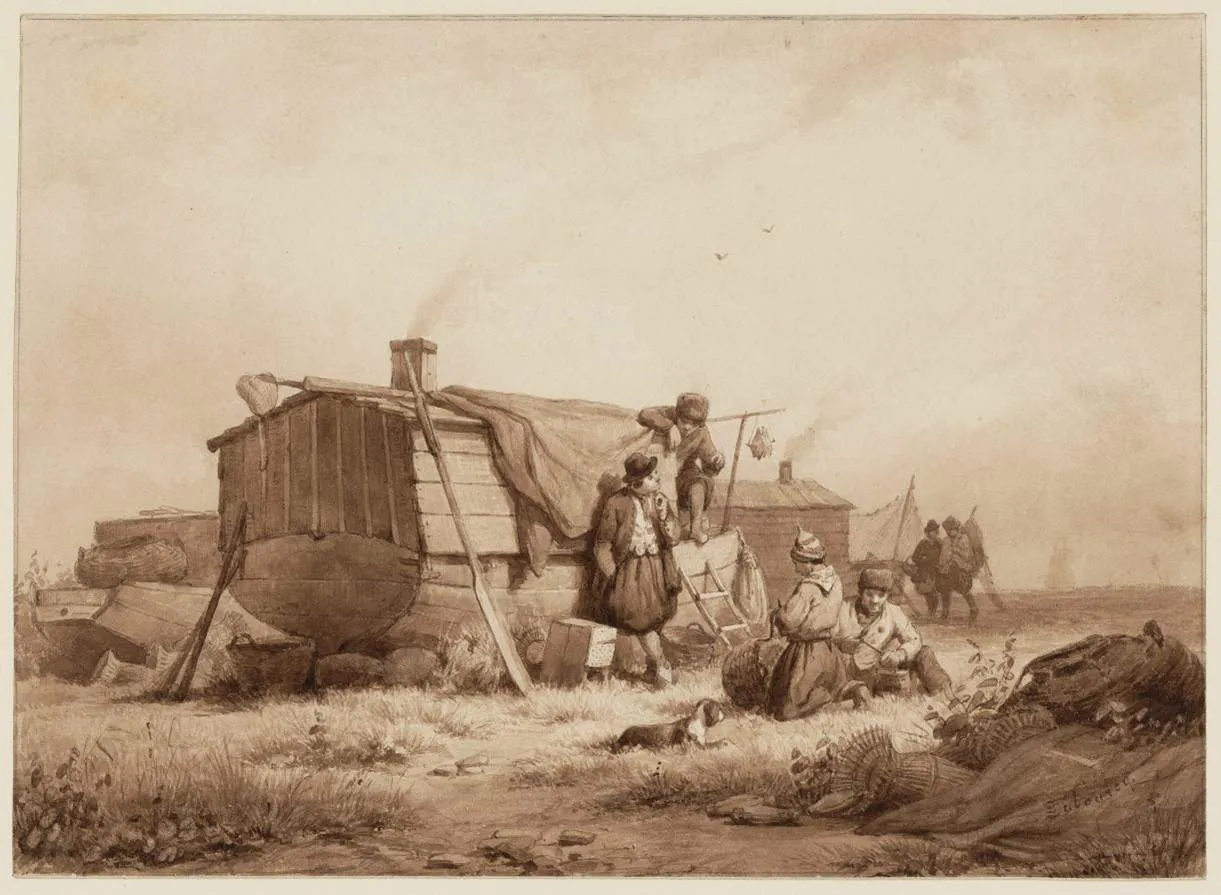
Houseboats, also called 'hondehokken', on the site of the former fishing harbor behind the Tolhuis. P.L. Dubourcq, 1840. Source: Amsterdam City Archives.
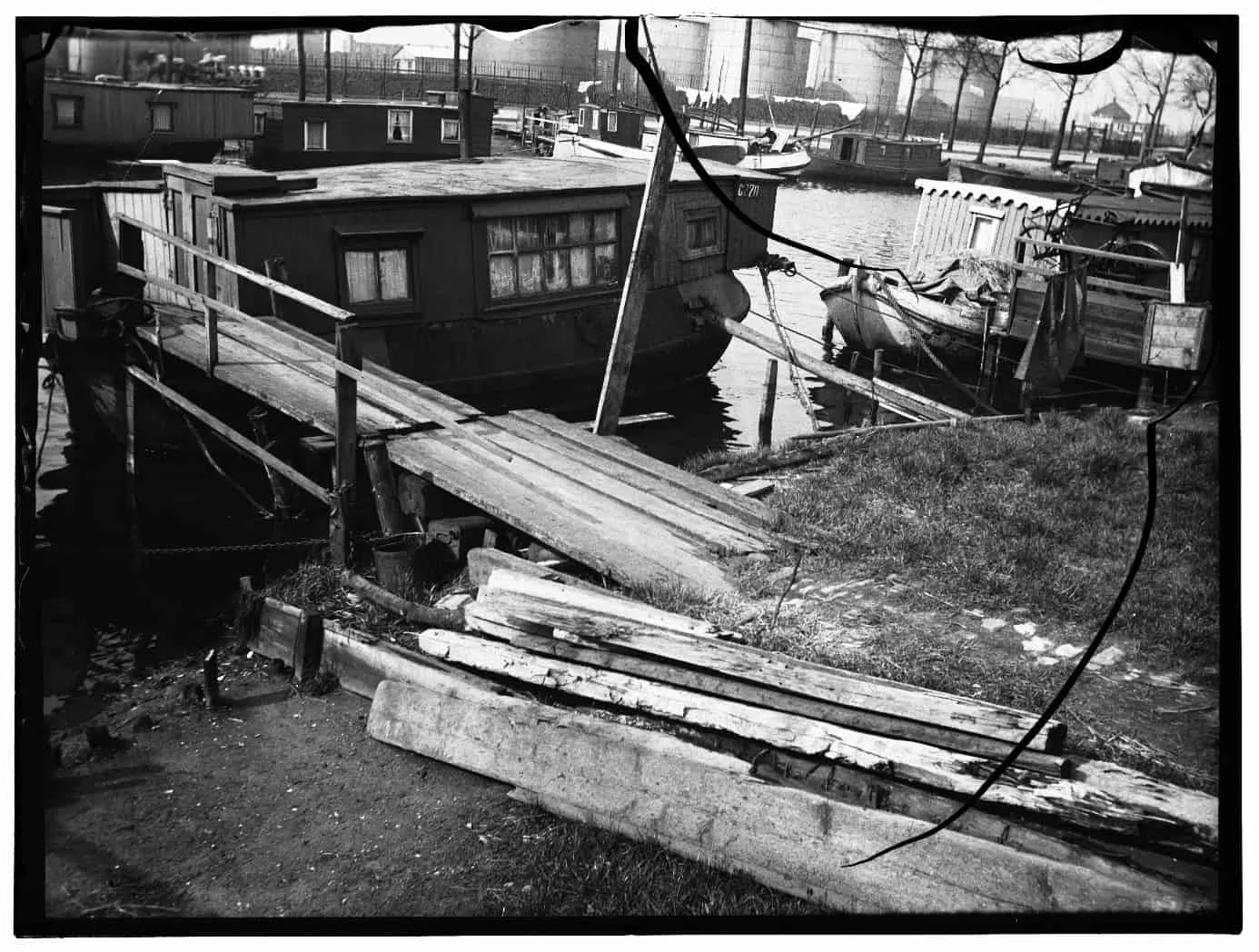
Houseboat on the Grasweg, 1932. Source: Amsterdam City Archives
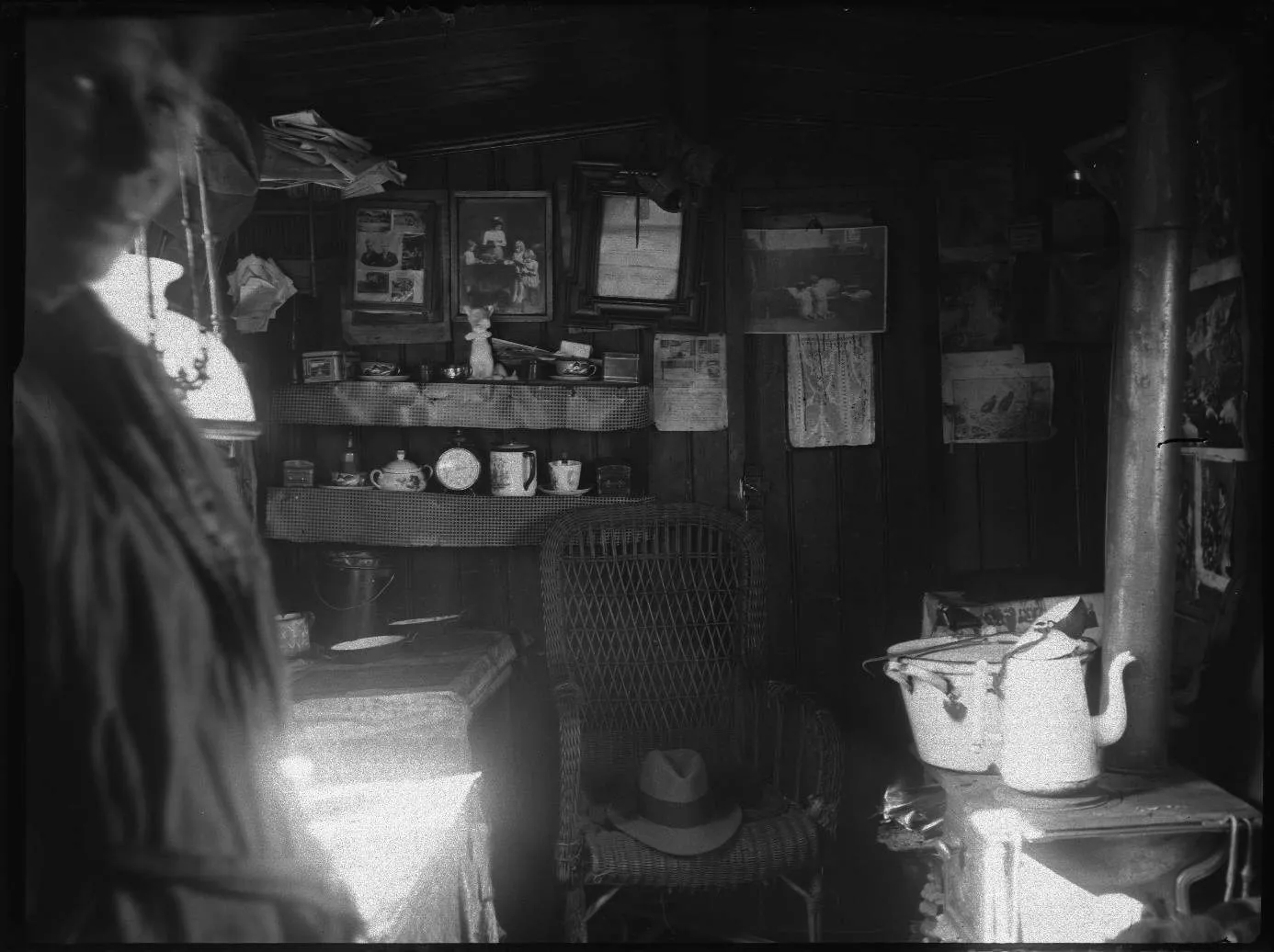
Interior of a houseboat on the Grasweg, 1932. Source: Amsterdam City Archives
At the end of the nineteenth century, wooden sailing ships from inland shipping were replaced by steel boats. The old wooden sailing ships were bought up and converted into houseboats; 'woonschepen', that is. In times of housing shortage, especially on the outskirts of the city such as in Amsterdam-Noord, slum dwellings emerged on the water. Eventually, in the twentieth century, due to the lack of housing on land, houseboats became increasingly popular. Especially after the First and Second World Wars, the number of houseboat residents rose rapidly. The primary cause of this growth in houseboat living was a distressing housing shortage. In these times, sometimes several families even lived on a single boat. However, the residents of these houseboats were not only people in urgent need of shelter; wealthier residents also used the houseboat to commute between the city and nature. These more upscale houseboats were usually located in the Amstel.
Subsequently, the Caravans and Houseboats Act was introduced in 1918. According to this law, houseboat residents were required to have a permit for their boat, their children had to attend school, and alcohol consumption had to be limited. The houseboats themselves also had to meet 'certain requirements'.
One of the longest-inhabited houseboats was located near the Amstelveld until 2022: the Dogger. This boat, depicted in this 1935 painting by Meijer Bleekroode, was a so-called 'waterhaler' (water fetcher) for the Amstel Brewery. In 1888, water mains were laid in the city, causing the boat to lose its function as a water fetcher. In that same year, fuel merchant Dogger bought the boat, and it was converted into a sales point for coal and wood. He also began living there at that time. The boat was inhabited until 2022.
Today, living on a houseboat is no longer a cheap solution. The municipality has fixed the number of moorings, meaning no new locations are being added. As a result, prices have been driven up significantly. However, living on the water does not necessarily have to take the form of living on a ship. For example, in the Johan van Hasseltkanaal in Amsterdam-Noord lies Europe's most sustainable floating neighborhood, called 'Schoonschip'. Thirty floating arks with full-fledged homes on top create a green and as energy-neutral as possible neighborhood, but on the water!
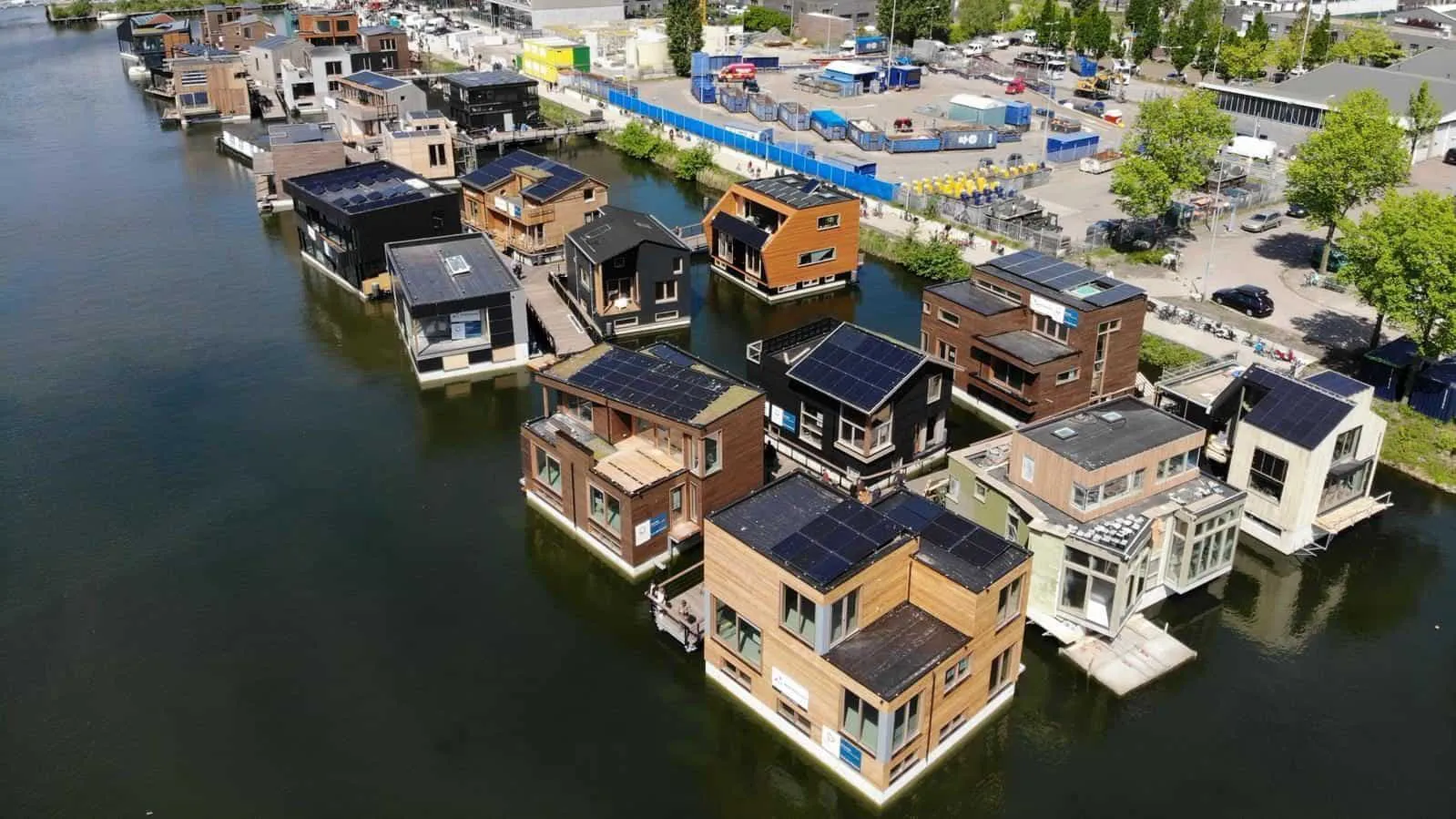
The Schoonschip neighborhood in Amsterdam-Noord. Source: City of Amsterdam
The canalsThe Venice of the North
 The canals
Facades through the centuries
 The canals
Biodiversity and climate change on the canals