Header stijlkamers Grachtenmuseum
On view

Period rooms and building

A canal house from 1665, from the seventeenth century to the present

Our canal house from 1665

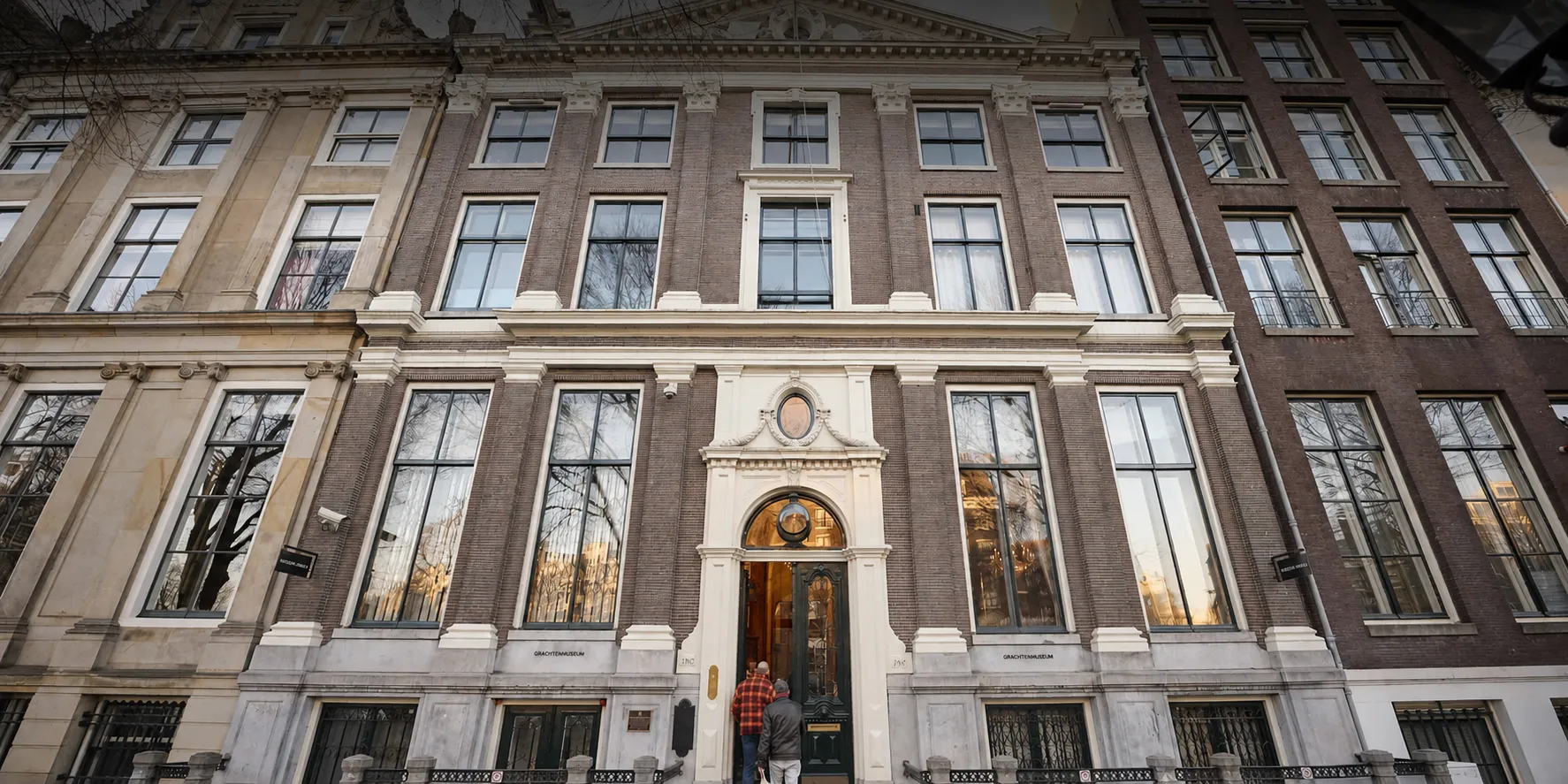
The beautiful canal house where we are located still has original elements from the time it was built, as well as from the centuries that followed. During your visit, you'll learn more about the history of the building and its residents, from the seventeenth century up to now.

Residents and architect of the building

Our building, at Herengracht 386, was once commissioned by the wealthy merchant Karel Gerards. In 1663, he commissioned Philip Vingboons to design and build the house. Vingboons was one of the most influential architects of the seventeenth century. He also designed the famous Cromhouthuizen a little further down the Herengracht.

Philips Vingboons

Philips Vingboons was the son of the Flemish painter David Vingboons, who moved to the Netherlands with his parents as a child due to the siege by the Spaniards. He built a life in Amsterdam, and had ten children there, including Philips. Almost everyone in the family was involved in the arts, and Philips was no exception. He also initially wanted to be a painter before he, like two of his brothers, turned to architecture. He had a very successful career in which he designed many buildings – often in a recognizable classicist style – on the Amsterdam canals and beyond. His most famous achievement is the invention of the Amsterdam neck gable, which can also be admired on the Cromhouthuizen.

Residents

After the death of Karel Gerards, this building was the home of many merchants, mayors, and bankers, including Jan Willink. Willink, who bought the house in the eighteenth century, was a co-financier of the American Revolutionary War. Together with two of his colleagues, he lent money to John Adams, who would later become the second president of the US.

From residence to museum

Herengracht 386 has been renovated many times over the centuries. The last renovations took place in 2010, when the museum was prepared for its opening in 2012. Subsequently, the silent garden was created in 2022.

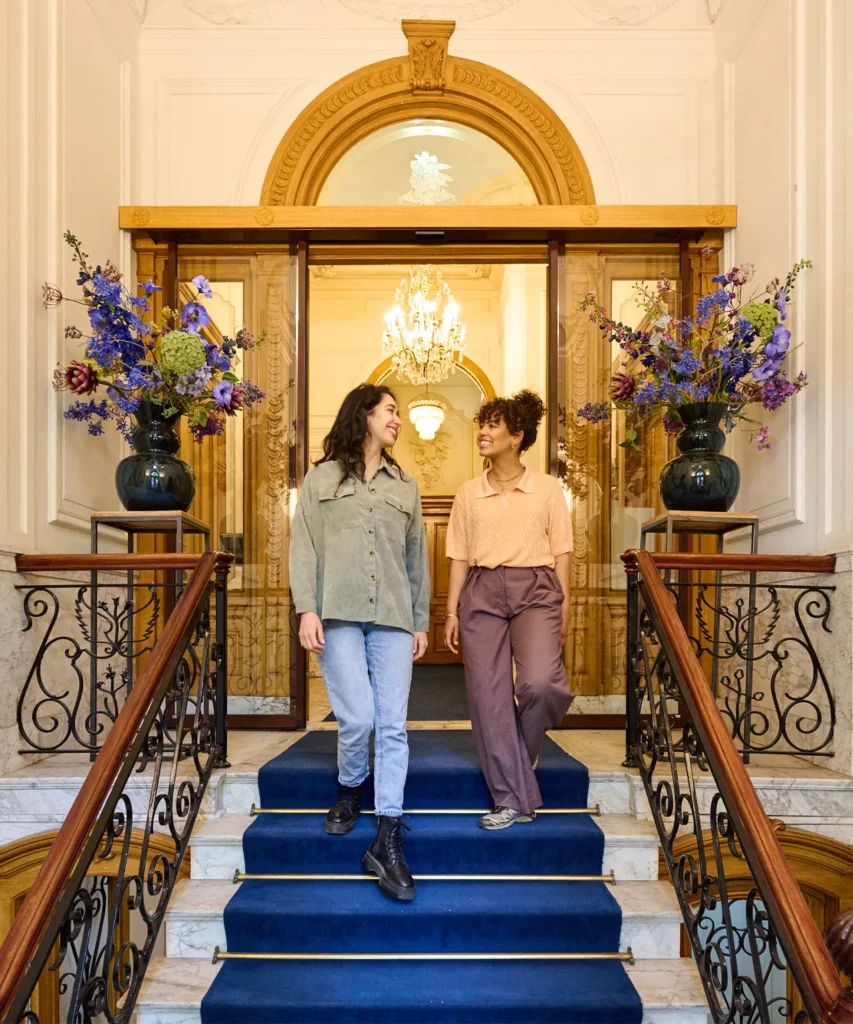
Entree van het Grachtenmuseum
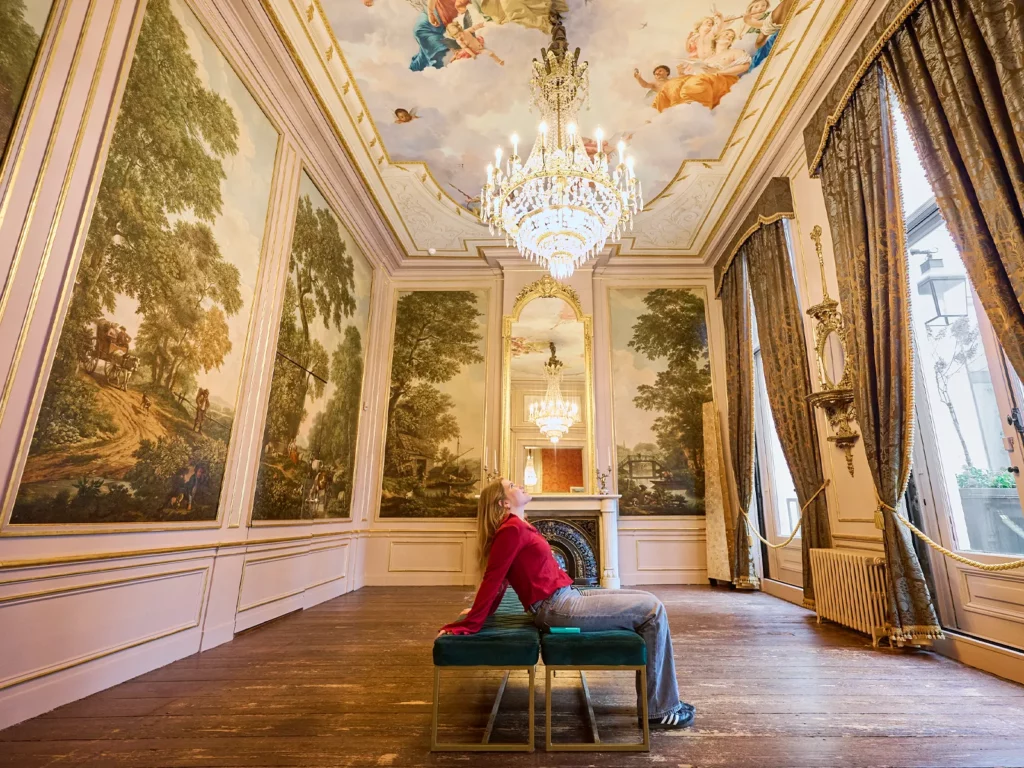
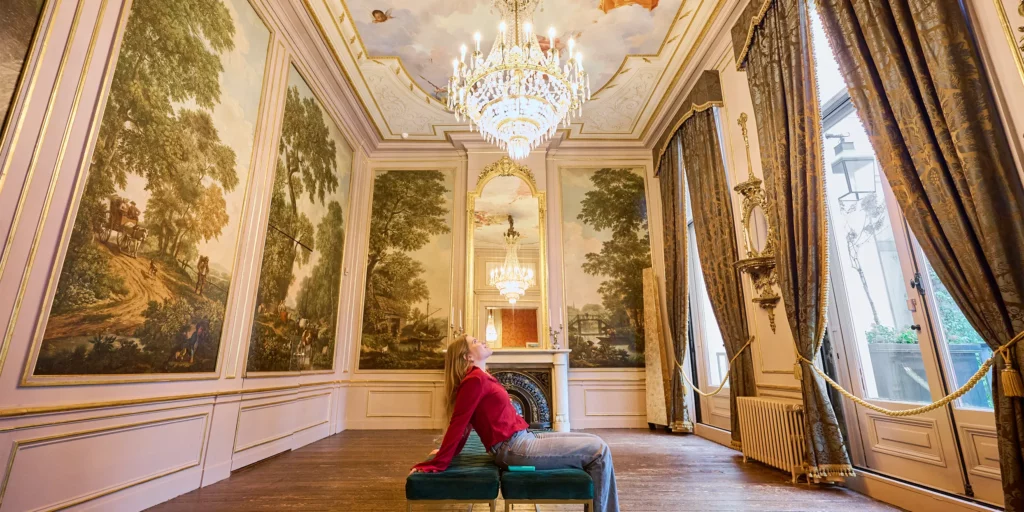
Someone sitting on a bench in the Andriessenkamer looking up in the GrachtenmuseumDetail Andriessen Room

The Andriessen Room

This room is named after the creator of the wall paintings: Jurriaan Andriessen (1742-1819), an Amsterdam son of German parents. During his life, Andriessen made many wallpaper designs and also painted sets for the theater. He was a true decorative painter, which is evident in this room. When you are in the room, you are immediately immersed in a wonderful idyllic landscape with all possible romantic ingredients. Here you can observe a country road, animals, a ruin, a bridge over still water, and of course an abundance of plants and trees. It is not surprising that this space was seen as a 'garden room' – with a view of the actual garden.

Andriessen painted this scene in 1776, but likely not for this space. It was probably initially created for the Great Hall. This is also visible in the painting itself: some details appear to be cut off and treetops are sometimes missing. In addition, the painted shadows are not in line with the light from the sun. For a painting made for a specific space, that would have been customary.

Relocated mural

The mural was likely moved during a renovation in the second half of the nineteenth century. The hallway, which originally ran from the front door to the garden, was shortened, and this room was created. There was then space for the mural. We do not know exactly how it was moved – it was undoubtedly a complex task.

Ceiling painting

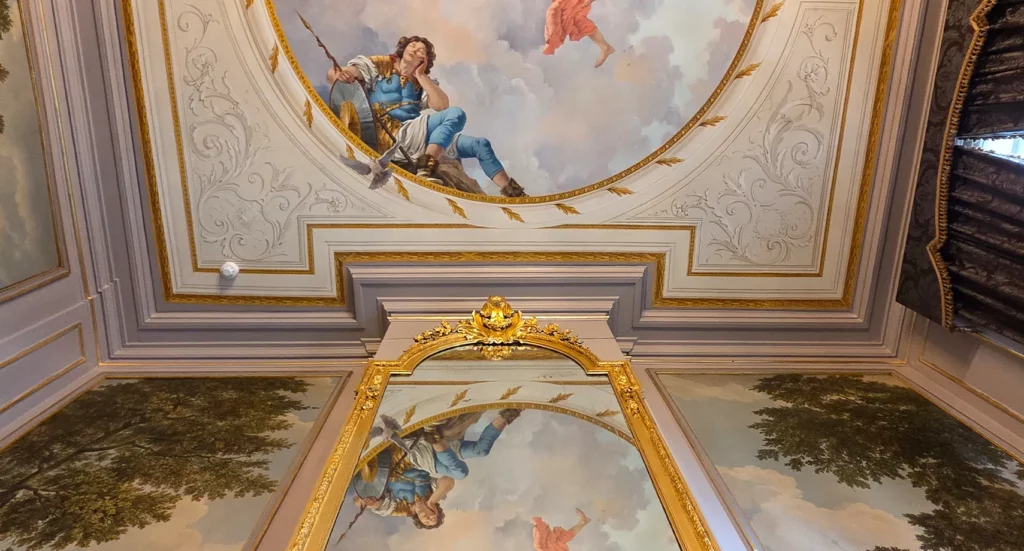
There is another remarkable piece of painting to be found in this room: the ceiling painting by the French artist Pascal Amblard. At first glance, it might look like an eighteenth-century work, but it was painted in 2022. Amblard was inspired by the history of Amsterdam and how people of different cultures and beliefs live together. The dreaming young man you see by the fireplace is the key to the work: he dreams about all the other figures.

Discoveries

The floor in this room was laid towards the end of the nineteenth century. This is clearly visible from the planks: they are all of equal width and made of the same wood. They were discovered during the renovation of 2010, when the parquet floor was removed. Research into the layers of paint on the wall also revealed what color of paint was on the walls between the murals in the eighteenth century.

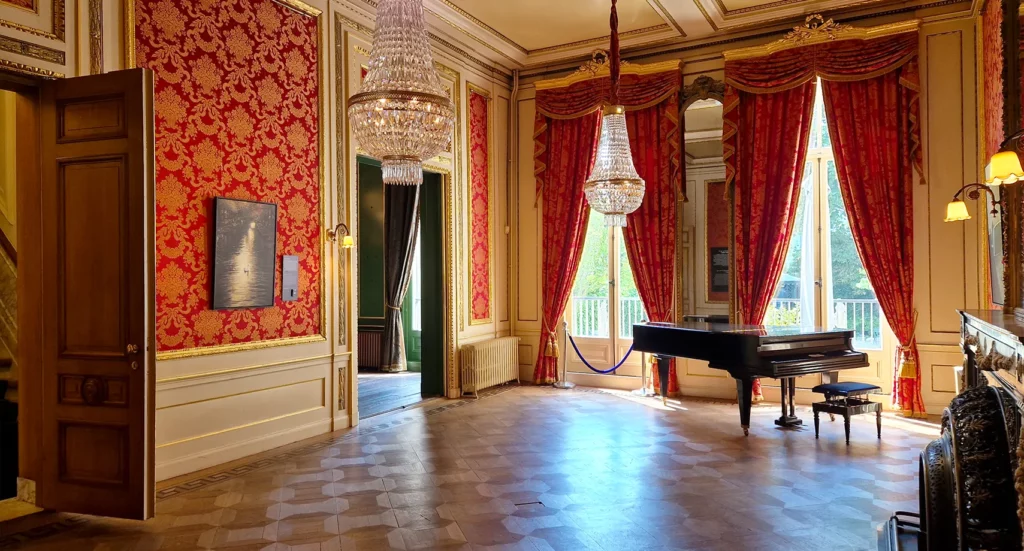
Grote zaal van het Grachtenmuseum
Stijlkamers Grachtenmuseum

The period rooms: front and back hall

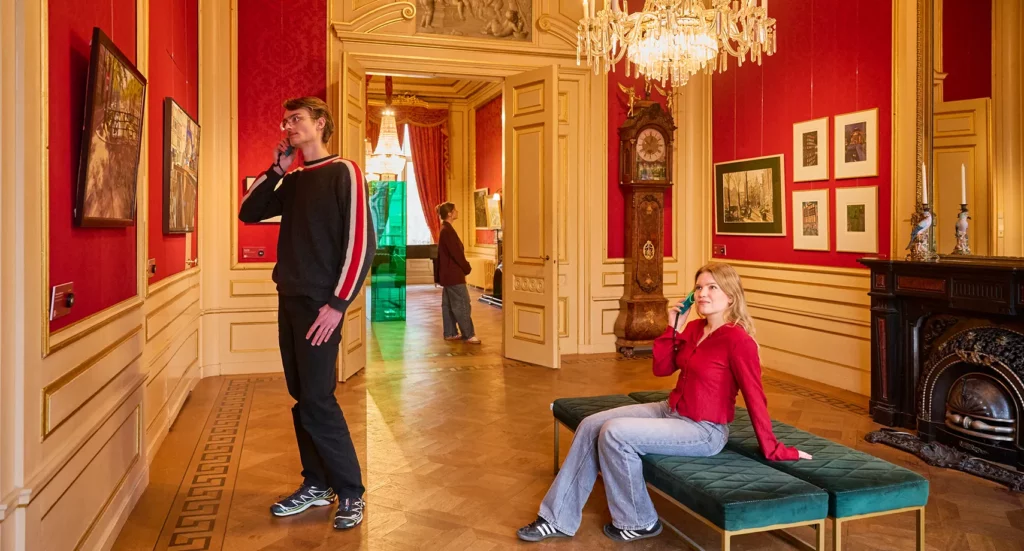
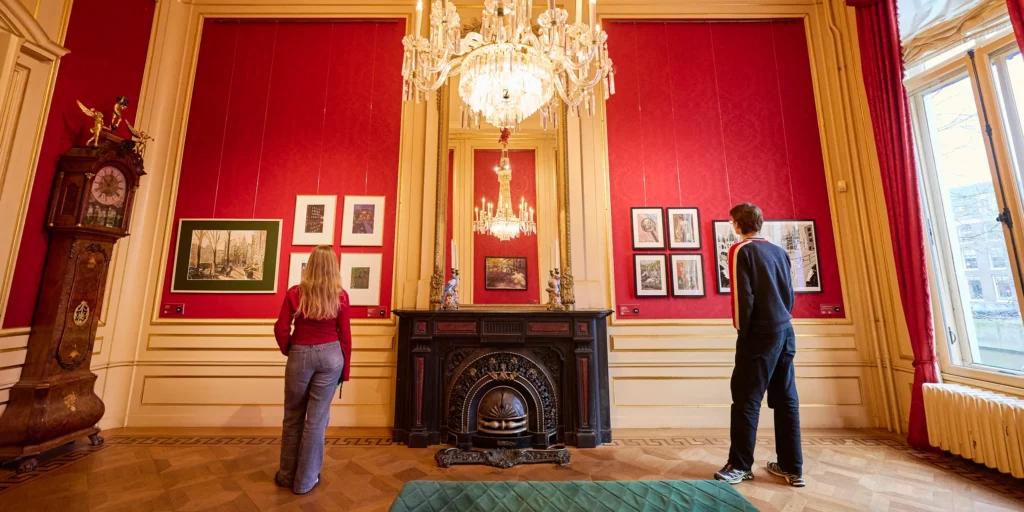
The rooms on the principal floor (bel-etage) are period rooms. They were used for special and official occasions. Additionally, they were intended to reflect and support the status of the 17th-century owner.

19th-century find

During the 2010 renovation, the two period rooms were restored in nineteenth-century style, but seventeenth-century elements can still be found. In the back hall, for example, there is the coffered ceiling (with the large rectangular sections). Furthermore, a 'false door' can still be found in the front hall. This is a door that more or less blends into the wall. Such doors were often installed opposite 'real' doors to create symmetry in the building.

Gold

A renovation in the nineteenth-century 'Empire' style was chosen. This is because a floor from that time was discovered in the back hall. In addition, original wall coverings were found. These inspired the design of the current wall coverings and curtains – all in the style that was popular during the time of Napoleon. You can recognize it by the use of rich fabrics and the abundance of gold. To restore the gold leaf to its original state, exactly 1 kilogram of gold was used.

See also

The canals

Architecture on the canals

Neck gables, classicism, and the architectural styles of the canal belt.

Tentoonstellingszaal GrachtenmuseumOn view

Exhibitions

See which temporary exhibitions are showing now.

Green Salon in the Museum of the CanalsVisit

Practical info

Everything you need to plan your visit.