 Visit
VisitTimes and prices
Plan your visit to the museum


Read the answers to the most frequently asked questions about visiting the Museum of the Canals and the history of the Amsterdam canals below.
What exactly can I see in the museum?
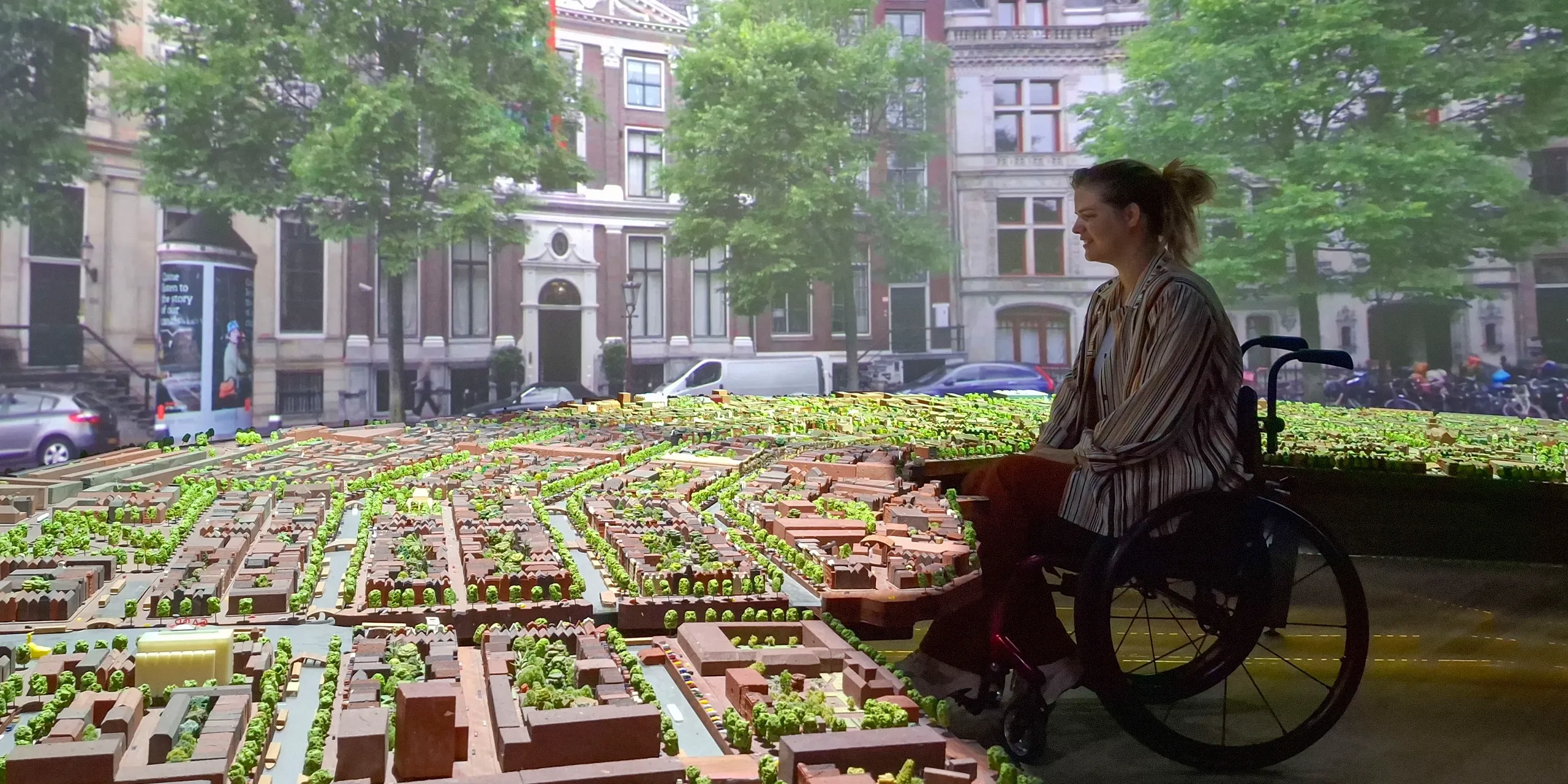
In our museum, you will find a multimedia exhibition about the history of the Amsterdam canals. In addition, there are temporary exhibitions in the period rooms.
What are your admission prices and opening hours?
All practical visitor information can be found on the Opening Hours and Prices page.
In which languages are audio guides available?
The audio guide is available in the following languages: Dutch, English, German, French, Spanish, Italian, Japanese, Chinese (Mandarin), and Russian.
Do you sell the Museum Card?
Yes, you can also purchase a (temporary) Museum Card at the museum, while stocks last.
Which discount cards can I use at the museum?
We accept the Museum Card, I amsterdam City Card, the ICOM card, and the Amsterdam City Pass. We do not accept the FriendsLottery VIP-CARD.
Can I also buy tickets online?
Yes, you can buy e-tickets online. It is not mandatory to book tickets online before your visit.
Is the museum wheelchair accessible?
Yes, our museum is wheelchair-friendly. Read more on the Accessibility page.
Can I borrow a wheelchair at the museum?
Yes, we have a wheelchair available for use. To reserve it, you can call +31 (0)20 42 11 656 in advance or email us at mail@grachten.museum.
Do you also have a museum café?
Unfortunately not. Fortunately, you can find the best cafés within walking distance. Feel free to ask our colleagues for advice during your visit.
Can I visit the garden?
Our garden can be visited during the Open Garden Days in Amsterdam. This takes place on the third weekend of June.
Are pets allowed inside?
Dogs, cats, and other pets are not allowed in the museum. We do make an exception for guide dogs and assistance dogs.
How did the Amsterdam canals originate?
The canals were constructed in the 17th century as part of a city expansion. They served for water management, transport, and city defense.
What is the oldest canal in Amsterdam?
The oldest surviving canal is the Oudezijds Voorburgwal, which dates back to the 13th century. This canal is located in the oldest part of the city, in the current Red Light District. Originally, the Damrak (now largely filled in) was also part of the oldest waterways, but the Oudezijds Voorburgwal is the oldest recognizable and preserved canal.
Where is the Golden Bend?
The Golden Bend is located on the Herengracht between Vijzelstraat and Leidsestraat. It is the most prestigious part of the canal, featuring grand 17th-century regent houses.
Why are canal houses leaning?
In addition to many canal houses subsiding, they were sometimes intentionally built leaning. For example, many facades deliberately lean forward so that rainwater drains off better and more space is created.
Why are canal houses narrow?
In the past, the width of the facade determined the amount of tax. A narrow house therefore meant lower taxes.
What is the longest canal?
At 6.3 kilometers, the Singelgracht is the longest canal in Amsterdam.
What is the shortest canal?
The Beulingsloot is the shortest canal in Amsterdam. It is only 50 meters long.
What is the order of the Amsterdam canals?
The order of the Amsterdam canals, from outside to inside, is Prinsengracht, Keizersgracht, Herengracht, and Singel. There is a handy Dutch mnemonic for this: 'Piet Koopt Hoge Schoenen' (Pete Buys High Shoes).
How deep are the Amsterdam canals?
The depth of the canals varies by location, but on average they are between 2 and 4 meters deep. Some spots may be slightly deeper, especially where the water is dredged more frequently.
How clean is the water in the Amsterdam canals?
In recent decades, the quality of the canal water has improved significantly. Waternet, the Amstel, Gooi and Vecht Water Board, and the City of Amsterdam ensure that the water in the canals remains clean.
Can you swim in the Amsterdam canals?
Although the Amsterdam canal water is becoming cleaner, it is not official swimming water. Doing so can lead to health problems and a fine.